- front page
- Recommended Article
- Life
- Hearing Aid Brand Recommendations | Top 5 Common International Brands in Taiwan + 2 Supplemental Brands, Compilation of Doctor's Advice and User Reviews
Hearing Aid Brand Recommendations | Top 5 Common International Brands in Taiwan + 2 Supplemental Brands, Compilation of Doctor's Advice and User Reviews
When people are looking for hearing aids for themselves or their family members for the first time, their first question is usually, "Which hearing aid brand is the best?" But those who have actually worn hearing aids know that hearing aids are not the same as mobile phones, televisions, or home appliances. The one with the highest specifications, the most expensive price, or the most recommendations online is not necessarily the most suitable for you.
There are four main factors that truly affect the effectiveness of hearing aids: the completeness of the hearing test, the accuracy of the audiologist's fitting, the suitability of the brand's sound characteristics, and the ease of subsequent adjustments and maintenance. The Department of Otolaryngology-Head and Neck Surgery at Taipei Veterans General Hospital also reminds users that after discovering hearing problems, an otolaryngologist should first determine the cause of the hearing impairment, followed by a comprehensive hearing test by a professional audiologist, including pure-tone audiometry and speech audiometry. Then, the appropriate model and brand of hearing aid should be selected based on its specific characteristics.
What are some common hearing aid brands in Taiwan? Let's look at 5 major international brands plus 2 supplementary brands.
Among the common hearing aid brands in Taiwan, international brands include Phonak, Oticon, Signia, Widex, and GN ReSound. Starkey and the Taiwanese brand Mimitakara are also frequently mentioned in comparison lists. Market research indicates that Phonak, Signia, Widex, GN ReSound, Starkey, Oticon, and Mimitakara are the hearing aid brands most frequently encountered by Taiwanese consumers.
Quick Comparison Table of Common Hearing Aid Brands in Taiwan
| brand | source | Suitable for ethnic groups | User experience | Purchase Reminder |
|---|---|---|---|---|
| Phonak Phonley | Switzerland | People who frequently attend meetings, travel often, and value Bluetooth connectivity and noise cancellation | It is easy to connect and has complete functions, but its performance in noisy environments is often discussed. | Prices are mostly in the mid-to-high range; it is recommended to try them on in person. |
| Oticon Oticon | Denmark | People who value natural sound, speech clarity, and long-term wear | Frequently discussed in terms of natural sound, human voice comprehension, and auditory comfort | Different hearing loss conditions result in significant differences in perception, requiring precise fitting. |
| Signia Sica | German | People who are unpredictable, have charging capabilities, Bluetooth connectivity, and whose natural speaking voice is a factor. | With a strong design sense and a wide range of functions, it's perfect for those who want a high-tech feel. | Before using it, elders should confirm that the operation is simple. |
| Widex Only Listen | Denmark | People who value sound quality, music, and natural sound layers | It is often compared by people who care about sound quality, and its sound delicacy is a hot topic of discussion. | If you are frequently in noisy environments, you need to test your speech recognition performance. |
| GN ReSound Resound | Denmark | People who value the convenience of apps, mobile connectivity, and remote adjustments | Smart connectivity and app operation are often cited as advantages. | The app is convenient, but the core function is still the audiologist's adjustment. |
| Starkey Stark | USA | People who want AI, health monitoring, and smart features | It has a strong technological feel and is suitable for people who value additional features. | Not everyone needs advanced intelligence functions. |
| Mimitakara Ear Treasure | Taiwan | For those with a limited budget, first-time users of hearing aids, and looking for domestic brands. | Price and service thresholds are relatively easy to take into consideration. | For moderate to severe hearing loss, a complete hearing assessment is still recommended first. |
(The mobile version of the table can be swiped left and right)
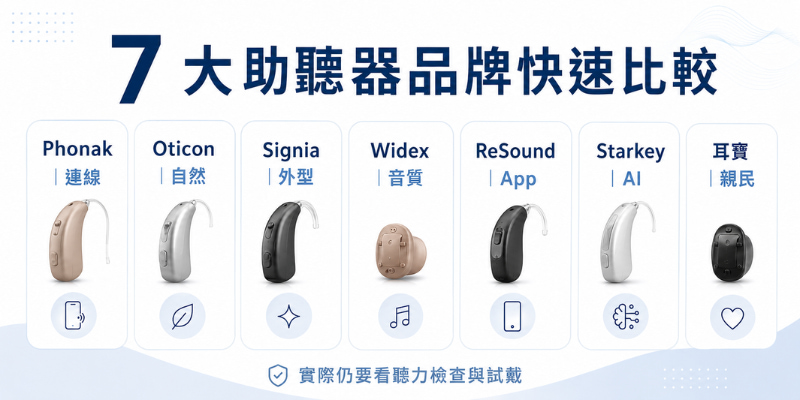
Hearing aid brand recommendation 1: Phonak, suitable for people who value Bluetooth connectivity and communication in noisy environments.
Official website : https://www.phonak.com/zh-tw
Phonak is a hearing aid brand under the Swiss Sonova Group, and it has a high profile in the Taiwanese hearing aid market. Phonak's official product page shows that its hearing aids cover mild to moderate, severe to profound hearing loss, and come in various forms such as ear-hook, open-ear, and in-ear types. It also emphasizes features such as rechargeable charging, wireless connectivity, Roger technology, and automatic ambient sound adjustment.
Based on online discussions, Phonak is often compared based on needs such as "full functionality," "Bluetooth connectivity," and "automatic switching between different environments." For people who frequently answer phone calls, attend meetings, travel, or need to clearly hear people in different situations such as restaurants, family gatherings, and offices, Phonak is usually the first brand they compare.
In terms of user experience, Phonak is more likely to appeal to people who want "not only to hear, but also to hear clearly, have a stable connection, and be easy to operate." In particular, people who use their phones frequently will pay more attention to Bluetooth stability, the ease of adjusting the app, and whether human voices can be heard clearly in noisy environments.
However, Phonak's mid-to-high-end models are usually quite expensive. If you simply want to improve conversations, watch TV, and basic daily communication at home, you don't necessarily need to go straight for the highest-end model. It's recommended to test it in three scenarios during the trial period: a quiet indoor conversation, multiple people talking simultaneously, and an environment with background noise. This will help you determine if it meets your needs.
Hearing aid brand recommendation 2: Oticon, suitable for people who value natural sound and long-term wearing comfort.
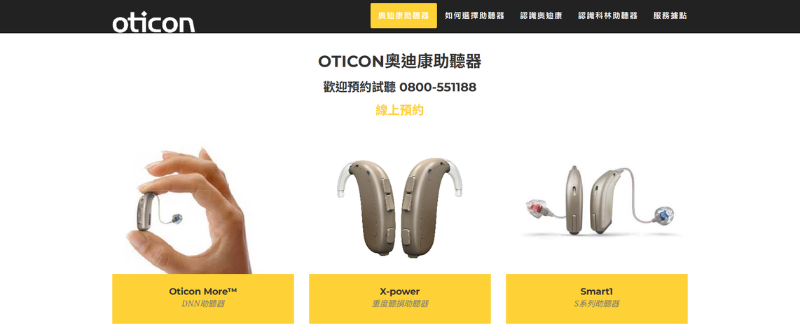
Official website : https://www.oticon.com.tw/
Oticon is a Danish hearing aid brand, distributed in Taiwan by Kolin Hearing Aids. The Oticon Taiwan website states that many factors need to be considered before choosing a hearing aid, most of which depend on the degree of hearing loss, ear structure, whether binaural hearing aids are needed, and personal lifestyle habits and usage needs.
The key points often discussed about Oticon are the concepts of "natural hearing" and "brain-based listening." When introducing Oticon Real, Colin Hearing Aids also mentioned that hearing loss requires the brain to expend more energy to fill in the sound gaps, which may increase fatigue. Oticon Real uses a sound processing concept based on neuro-auditory mechanics to help users receive more complete and natural sounds.
When we gathered information about Oticon online, common key concerns included: "Does the vocals sound more natural?", "Will it be tiring to wear for extended periods?", and "Is the background noise too overwhelming?". There are no absolute answers to these questions, as everyone's hearing loss frequency, speech recognition ability, and sensitivity to sound are different.
If it's for an elderly person, there are two things to pay special attention to with Oticon: first, whether prolonged wear causes fatigue; and second, whether they can clearly hear the main speaker during group conversations. Many elderly people don't dislike wearing hearing aids, but rather find them "too noisy, too tiring, and unnatural," ultimately choosing not to wear them at all. It's recommended to determine these factors during the trial period, as this is more meaningful than simply looking at the specifications.
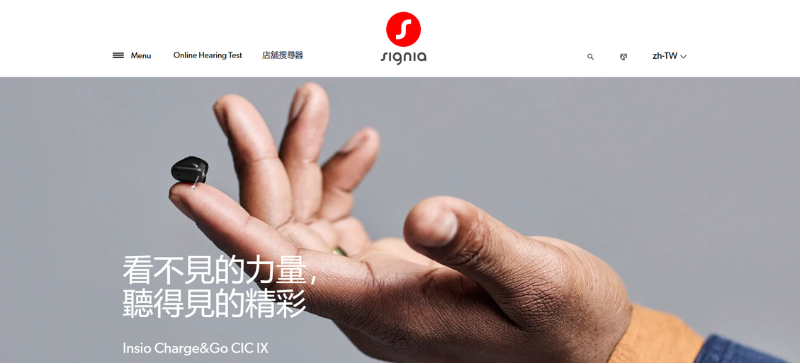
Hearing aid brand recommendation three: Signia, suitable for people who care about their appearance, charging time, and the naturalness of their voice.
Official website : https://www.signia.net/zh-tw/
Signia is a common German-made hearing aid brand in the Taiwanese market. The Signia Taiwan website introduces a product line including rechargeable ear-hook hearing aids, models supporting Bluetooth and telephone coil connections, and the Active Pro IX, which resembles headphones. The products emphasize comfortable wear, natural integration into conversations, rechargeability, and personalized app control.
Signia appeals primarily to those who don't want their hearing aids to look too "medical." This is especially true for working professionals, those who need to socialize, and those who are more concerned with their appearance; they may value the hearing aids being discreet, aesthetically pleasing, and not easily noticeable. In online discussions, a frequently mentioned aspect of Signia hearing aids is the "sound of one's own voice." Many people find it very uncomfortable when they first wear hearing aids because not only do external sounds become louder, but their own voice also sounds unfamiliar, muffled, or even like they are speaking from inside a barrel. Some Signia models focus on improving the naturalness of one's voice, making them a brand worth considering for first-time users.
However, Signia offers many features, and older adults may not use them all. When purchasing, don't just be attracted by "Bluetooth, App, charging, and appearance." Return to the most basic questions: After wearing it, is it easier for family members to speak? Can I reduce the need to turn the TV volume up? Is it too noisy in markets, restaurants, or outdoors?
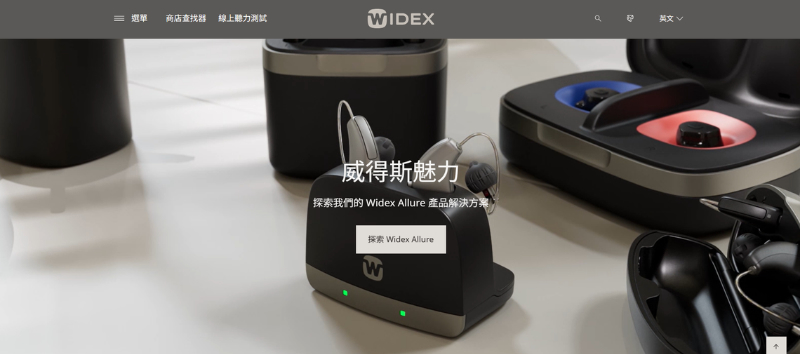
Hearing aid brand recommendation four: Widex, suitable for people who value sound quality, music, and sound detail.
Official website : https://www.widex.com/en/
Widex is a Danish brand often compared to other brands in terms of "natural sound quality" and "sound detail." Taiwanese retailers introducing Widex mention that the brand is renowned for its natural sound quality and innovative technology, offering products in various forms including miniature ear-hook, ear-hook, deep-canal, and in-canal designs.
Another channel introducing Widex also specifically mentioned PureSound technology and sound layering, emphasizing its aim to reduce the electronic feel caused by sound delay in traditional hearing aids, allowing users to hear sounds closer to nature. From a user perspective, Widex is more likely to attract people sensitive to sound. Those who enjoy listening to music, are attentive to environmental sound details, and find the sound of conventional hearing aids too harsh or mechanical are often interested in trying Widex. In public discussion threads, long-term wearers have shared their experiences with multiple brands such as Widex, Oticon, and Phonak, mentioning their strong focus on sound richness and detail. This reflects that hearing aids are not just about "amplifying sound," but rather that each brand's sound processing logic influences the subjective experience.
However, Widex may not be suitable for everyone. If the user's biggest problem is "not being able to understand human speech" in noisy environments such as restaurants, farmers' markets, or family gatherings, then they should not only listen to whether the sound quality is natural or not, but also actually test the speech clarity and background noise handling capabilities.
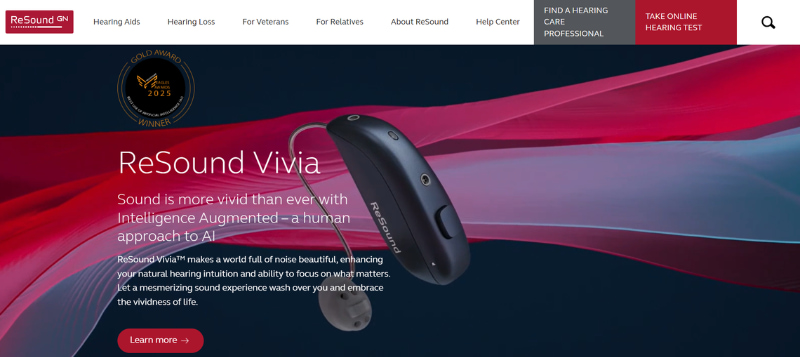
Hearing aid brand recommendation five: GN ReSound, suitable for people who value mobile apps and smart connectivity.
Official website : https://www.resound.com/en-us/
GN ReSound is a Danish hearing aid brand that also has agents and distribution channels in Taiwan. The Taiwan distributor states that GN ReSound is one of the world's leading brands of hearing aids and hearing testing equipment, emphasizing digital hearing aid technology, wireless Bluetooth communication, and hearing solutions.
The features that ReSound is often discussed for are its smart connectivity and app operation. For people who are used to using their phones to adjust volume, switch scene modes, answer calls, or watch videos, these features make hearing aids more integrated into daily life, rather than a "medical device that you can't move once you put it on."
In online usage scenarios, ReSound is suitable for people who don't just want to "simply amplify the sound," but rather want to be able to adjust it according to the environment. For example, at home, in a restaurant, outdoors, or in a meeting, different sound modes are needed, so people will care more about whether the app interface is intuitive, whether the connection is stable, and whether the phone operation is convenient.
However, it's important to remember that no matter how convenient an app is, it cannot replace professional fitting. The real factors affecting the effectiveness of hearing aids are the hearing curve, the condition of each ear, speech recognition ability, and subsequent fine-tuning by an audiologist. If the initial settings are inaccurate, relying solely on the app for adjustments will usually result in a setup that is both comfortable and provides clear hearing.
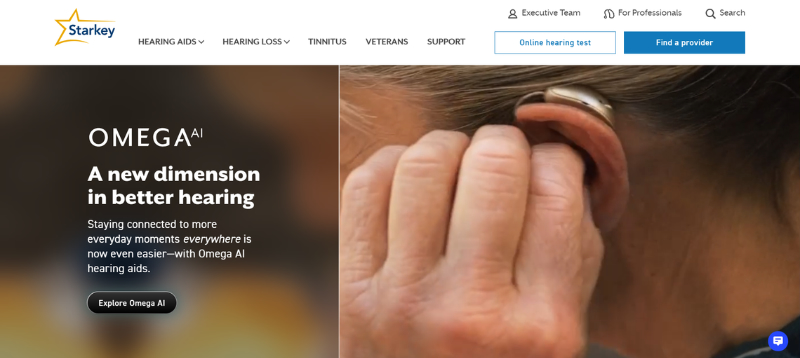
Additional brand 1: Starkey, suitable for those who want AI, health monitoring, and smart features.
Official website : https://www.starkey.com/
Starkey is an American hearing aid brand, frequently mentioned in hearing aid brand comparisons in Taiwan. Market research often describes Starkey as a brand known for its AI-powered hearing aids, integrating health monitoring, translation, and other smart functions. Starkey appeals to tech-savvy consumers, especially those who want a hearing aid that goes beyond just hearing aids, incorporating health monitoring, fall detection, smart voice assistants, and daily living assistance. For elderly family members who prioritize safety and care, these features are particularly attractive.
However, Starkey also serves as a reminder to readers of one thing: more features don't mean everyone needs them. If a user simply wants to hear family members clearly, watch TV without turning the volume up too high, and communicate smoothly when shopping, then basic hearing improvement and wearing comfort are more important than AI features.
Second supplementary brand: Mimitakara, suitable for those looking for a domestic brand with a lower price point.
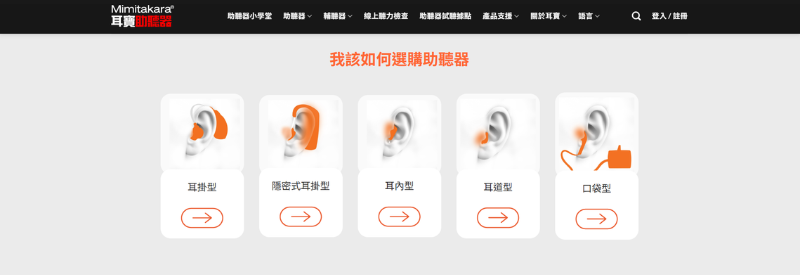
Official website : https://www.mimitakara.com.tw/
Mimitakara is a domestic hearing aid brand that is relatively common among Taiwanese consumers. According to Mimitakara's official introduction, the brand is currently independently researched, developed, manufactured, and sold by Taiwan's Yuanhao Energy Group, and has obtained numerous certifications and patents.
EarBoo's advantages are usually highlighted by its "domestic brand", "relatively affordable price", and "service locations and trial listening". For people who are new to hearing aids, have a limited budget, or are unsure whether they can wear them long-term, EarBoo can be a good starting point.
However, for moderate to severe hearing loss, significant decline in speech recognition ability, unilateral hearing loss, sudden hearing deterioration, or hearing loss that has already affected work and daily life safety, it is not recommended to use price as the primary criterion. In such cases, a complete evaluation should be conducted at an ENT specialist and a hearing center before deciding whether a higher-end hearing aid, binaural hearing aids, or other medical treatments are needed.
A compilation of online comments: Most people don't really care about the brand, but rather these 5 things.
When reading reviews of hearing aids, you'll find that users rarely just care about "which brand is the most famous." What truly makes people willing to wear them every day and continue wearing them are usually the following feelings.
1. Is the voice natural or not?
Many people are startled when they first wear hearing aids because they suddenly hear many sounds they had never noticed before, such as the sound of air conditioning, the sound of dishes, footsteps, and the sound of paper rubbing. At this time, the most common reaction of users is not happiness, but rather feeling that "it's so noisy".
Therefore, "naturalness" is very important. Naturalness does not mean that the sound is quiet, but that the sound is not harsh, mechanical, or makes you want to turn it off constantly after it is amplified. Widex, Oticon, and Signia are often compared in terms of natural sound, but in the end, it still depends on the individual's hearing loss and the adjustment by the audiologist.
2. Is the human voice clear or unclear?
Hearing aids don't simply amplify all sounds; they help users understand human voices. Many older people say, "I can hear, but I can't understand clearly." This is a typical difference. When purchasing a hearing aid, it's essential to test it in various scenarios, such as family members talking, group conversations, watching TV news, or dining in a restaurant. Being able to hear clearly in a quiet room doesn't guarantee you'll hear clearly in real-life situations.
3. Wouldn't a noisy environment be too painful?
Restaurants, markets, and family gatherings are the places where hearing aids are most easily tested. Many people aren't dissatisfied in quiet environments, but rather feel increasingly annoyed as soon as they step outside because all the sounds seem to be crammed together. Brands like Phonak, Oticon, ReSound, and Signia often emphasize features such as noise cancellation, directional microphones, and automatic ambient sound switching, but the names of these features aren't the key point. The key point is whether you can actually distinguish who is speaking when you wear them.
4. Would the older generation be willing to wear it every day?
When buying hearing aids, many family members only want to buy the best, but what the elderly really think about is: "Will it be troublesome? Will it be uncomfortable? Will others see it?" If the elderly person's fingers are not dexterous, a model that is too small may not be suitable; if they often forget to change the batteries, a rechargeable model will be more convenient; if they are very averse to the appearance, in-ear or less conspicuous models can be tried first. Whether a hearing aid is good or not depends not only on the hearing effect, but also on whether the user is willing to wear it every day.
5. Is after-sales service convenient?
This is very important. Buying a hearing aid isn't the end of the process; it usually requires cleaning, maintenance, fine-tuning, earmold replacement, and hearing monitoring. The Ministry of Health and Welfare also reminds users that hearing aids need daily cleaning, should be kept dry, and should be regularly returned to the manufacturer for maintenance, as well as adjustments based on the user's hearing condition. Therefore, when choosing a brand, you should not only consider the brand name but also whether there is a convenient store or hearing center near your home for adjustments. For the elderly, the long distance to after-sales service is often the reason why hearing aids end up in a drawer.
Medical advice: Don't rush to buy a hearing aid before you choose one.
1. First, see an ENT specialist to confirm whether the hearing loss is caused by an underlying medical condition.
Not all hearing loss requires immediate hearing aid fitting. Some cases may be caused by earwax buildup, inflammation, middle ear effusion, eardrum problems, sudden deafness, or other ear diseases. Taipei Veterans General Hospital reminds everyone that if you notice hearing problems, you should first see an otolaryngologist to identify the possible causes of your hearing impairment. Treatable issues should be addressed first before considering hearing aid fitting.
2. Complete a full hearing test; don't rely solely on a simple test.
Hearing aid fitting is not just about whether you can hear or not; it also involves considering the frequency of hearing loss, the difference between the left and right ears, speech recognition ability, the most comfortable volume, and the least comfortable volume. Taipei Veterans General Hospital also mentioned that a complete evaluation should include pure-tone audiometry, speech audiometry, and sound field testing and real-ear measurements after a trial fitting.
3. Don't wait too long to pair your voice, as this may reduce its recognition capabilities.
Many people wait until their hearing problems become "really serious" before getting hearing aids, but delaying hearing loss for too long can lead to a progressively worsening speech recognition ability. According to Chi Mei Medical Center, older adults who delay wearing hearing aids may experience a faster decline in speech recognition ability. By the time their pure-tone hearing threshold is very high or their speech recognition ability has already significantly decreased, the effectiveness of hearing aids will naturally be reduced.
4. Verify the medical device license before purchasing; do not buy products from unknown sources.
Hearing aids are classified as medical devices in Taiwan, and price should not be the sole consideration when purchasing them. The Food and Drug Administration (FDA) of the Ministry of Health and Welfare reminds consumers to follow the "one recognition, two checks, three usage" guidelines when buying hearing aids: recognize that hearing aids are medical devices; carefully check the medical device license number or registration number; and read the instruction manual carefully before use to ensure correct usage.
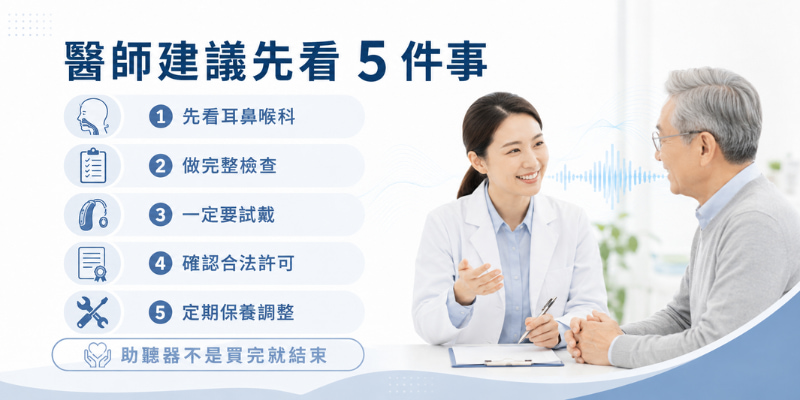
How to choose a hearing aid? Using real-life scenarios is more accurate than brand.
Hearing Aid Selection Situation Comparison Table
| Your needs | Priority comparison direction | Brands that can be auditioned first |
|---|---|---|
| I frequently answer phone calls, attend meetings, and use my mobile phone. | Bluetooth connectivity, App operation, noise cancellation | Phonak, ReSound, Signia |
| Wearing it for a long time might cause ear fatigue. | Natural listening experience, clear voice, and comfort. | Oticon, Widex, Signia |
| Frequently visit restaurants, markets, and family gatherings | Voice recognition in noisy environments | Phonak, Oticon, ReSound |
| I love music and appreciate sound details. | Sound quality, layering, natural sound | Widex, Oticon |
| The first time an elder wears it | Simple to operate, convenient after-sales service, and trial wearing service. | Phonak, Oticon, Ear Treasure |
| Want smart features and health assistance | AI, health monitoring, smart connectivity | Starkey, Phonak, ReSound |
| Limited budget, want to get started | Price, warranty, service locations | Earphones, some entry-level models |
(The mobile version of the table can be swiped left and right)
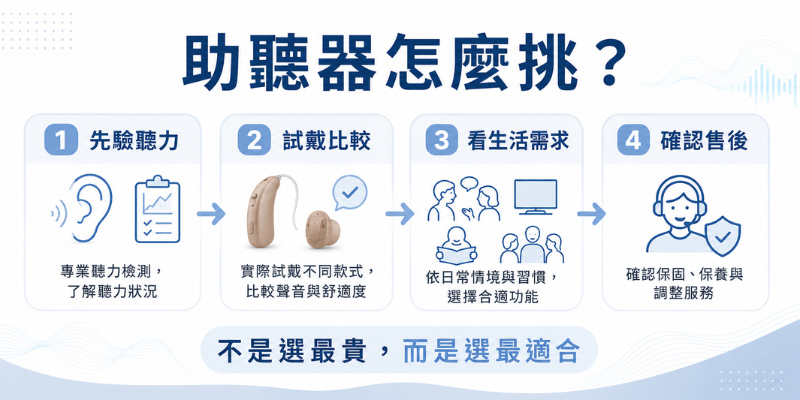
Eight questions you must ask your audiologist when trying on hearing aids.
When choosing a hearing aid, many people are embarrassed to ask too many questions, but these are questions that you must ask clearly:
| question | Why it is important |
|---|---|
| Should I wear a single or dual ear hearing aid based on my hearing loss level? | When both ears are hearing-impaired, wearing hearing aids in both ears usually helps with direction perception and understanding of noisy environments. |
| Is this device suitable for my hearing profile? | Different frequencies of hearing loss require different adjustments; not every device is suitable. |
| How long can I try them on? | Hearing aids require an adaptation period; it is not recommended to make a decision after only listening for a few minutes. |
| Will there be any fees for subsequent minor adjustments? | Hearing aids often require multiple fine-tuning adjustments, so the cost should be confirmed beforehand. |
| How long is the warranty? What items are included? | Ask about repairs, loss, moisture damage, batteries, and charging cases. |
| How often should I clean and maintain my skin? | Prolonged use will affect sound output and machine lifespan. |
| If I'm not used to wearing it, can I exchange it for a different size? | First-time wearers need a lot of elasticity |
| Have you done a sound field test or real-ear measurement? | It can more closely resemble the actual hearing effect after wearing them. |
(The mobile version of the table can be swiped left and right)
Frequently Asked Questions (FAQ)
Q1: Which hearing aid brand is the best?
There is no absolutely best brand of hearing aids, only the brand that best suits your hearing condition and life situation. Phonak, Oticon, Signia, Widex, and ReSound are all common international brands in Taiwan, but everyone's degree of hearing loss, speech recognition ability, ear canal condition, and wearing experience are different. It is recommended to try at least 2 to 3 brands before making a decision.
Q2: Do I have to buy an international brand hearing aid?
Not necessarily. International brands generally have more mature technology, more complete product lines, and more feature options, which may give them an advantage in terms of price, service, and entry-level prices compared to domestic or entry-level brands. If you have mild to moderate hearing loss and a limited budget, you can include domestic brands in your comparison; however, if you have moderate to severe hearing loss or poor speech recognition ability, it is recommended to have an evaluation by a professional audiologist before making a choice.
Q3: Are more expensive hearing aids always better?
Not necessarily. Higher-end hearing aids typically offer more comprehensive features such as noise cancellation, Bluetooth, automatic ambient sound switching, directional microphones, and sound processing. However, if a user's lifestyle is simple and they primarily converse with family members at home, they may not need the highest-end model. The key is whether the features are useful and whether the hearing aid is comfortable and provides clear sound.
Q4: What if an elderly person doesn't want to wear a hearing aid?
Many elderly people don't necessarily not need hearing aids, but they're not used to them, afraid of being seen, find them noisy, or think they're a hassle. You can start by having them try them on; don't force them to buy one right away. You can also choose models that are easy to operate, rechargeable, and have a discreet design, and let them know that hearing aids don't signify old age, but rather make daily communication easier.
Q5: Do I need to adjust my hearing aids after I buy them?
Yes, it is necessary. Hearing aids are usually not perfectly set the first time, especially for first-time users who need to adapt to the sound and may require minor adjustments based on daily life situations. The Ministry of Health and Welfare also reminds users that hearing aids should be maintained regularly and adjusted according to the user's hearing condition.
Conclusion: The truly good hearing aid is not the one most recommended online, but the one you'd be willing to wear every day.
If you are comparing hearing aid brands, Phonak, Oticon, Signia, Widex, and ReSound can be considered as the five major international brands commonly found in Taiwan. If you want to see more smart features or different price options, you can also include Starkey and Mimitakara in the comparison.
However, the hearing aid that is truly right for you is not necessarily the one most recommended online, nor is it necessarily the most high-end or the most expensive one. The key to a hearing aid is not "brand ranking," but whether the machine can adapt to your hearing curve, living environment, and usage habits, allowing you to hear the voices of your family members, the conversations of your friends, and those details in life that were slowly disappearing.
The biggest mistake when choosing a hearing aid isn't buying the wrong brand, but rather making a hasty decision without first having it checked, tried on, and adjusted. Instead of asking "Which brand is the best?", ask yourself: "What kind of sound is suitable for my hearing condition? What features do I need for my daily life? And who can help me with long-term adjustments and care after I buy it?" Hearing aids don't simply make the sound louder; they bring people back into conversation. This is the most important aspect to consider when choosing a hearing aid.

You may be interested

Recommended topics
Top Charts
All articles
article keywords
Subscribe to newsletter
article outline