- front page
- Recommended Article
- Life
- 2026 Probiotic Recommendations | Comparison of 10 Popular Brands: Strains, Bacterial Count, and Key Selection Points All in One Go
2026 Probiotic Recommendations | Comparison of 10 Popular Brands: Strains, Bacterial Count, and Key Selection Points All in One Go
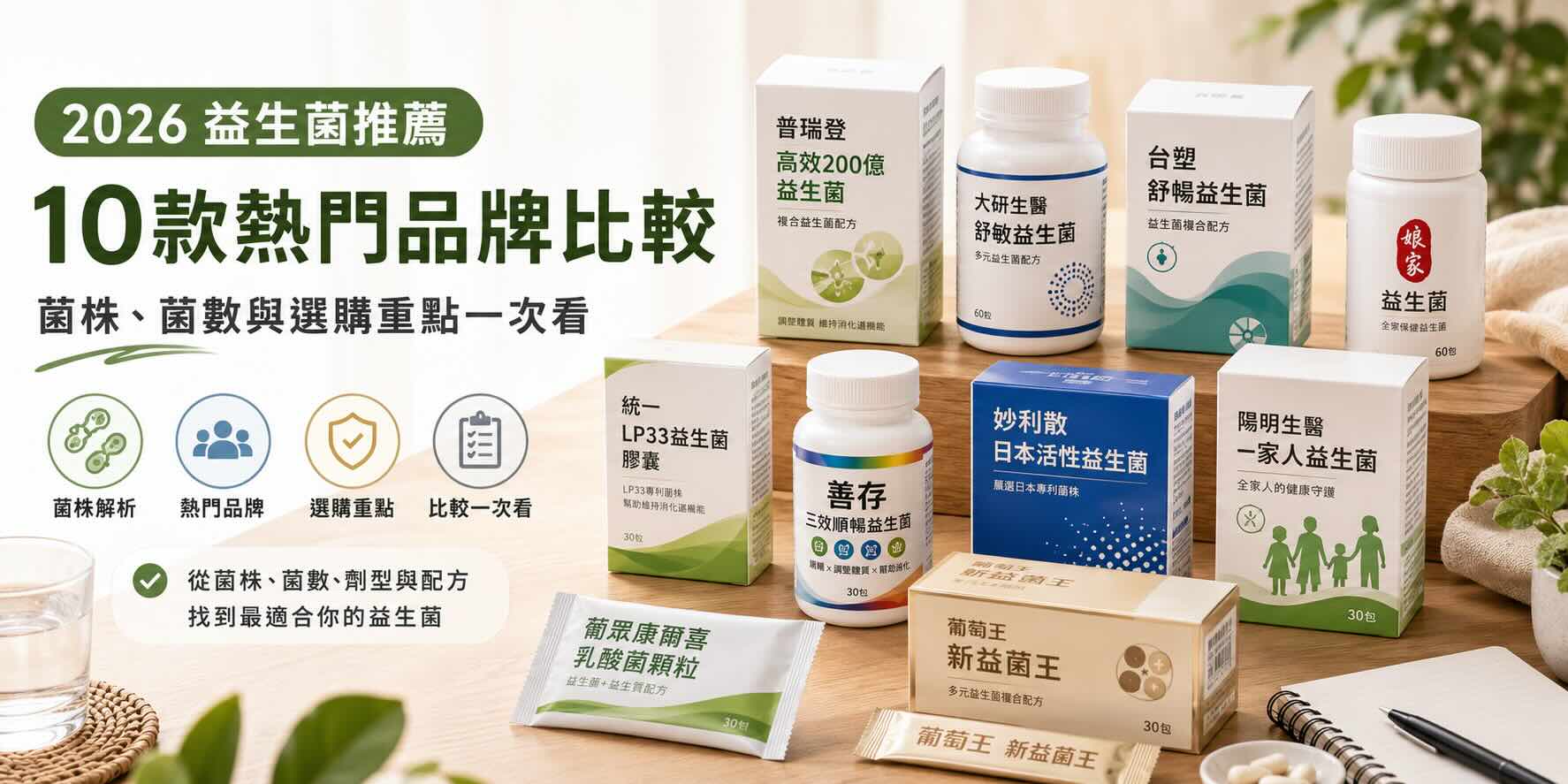
Searching for "probiotic recommendations" on shopping websites will quickly reveal a dizzying array of numbers: 10 billion, 30 billion, 100 billion; strains ranging from 3 to over 20. Some emphasize patented strains, others highlight packaging technology, and still others include dietary fiber, digestive enzymes, vitamins, or colostrum protein. The question is, does a higher bacterial count necessarily mean it's worth buying? Does more strains equate to a more complete effect? The answer is not that simple.
The World Gastroenterology Organization points out that the effects of probiotics are usually related to specific strains, dosage, and intended use. Just because two products contain lactic acid bacteria does not mean they will have the same effect. Therefore, when choosing probiotics, instead of focusing solely on the impressive numbers advertised, it's better to confirm a few more practical things: whether the strains are clearly labeled, whether the bacterial count is the factory output or the expiration date guarantee, whether the storage method suits your lifestyle, and whether the formula contains any ingredients you don't need.
This article compiles 10 commonly available probiotic products in Taiwan, focusing on strains, bacterial counts, dosage forms, formulations, and suitable usage scenarios to help you narrow down your choices. This article is a compilation of food nutrition and product information and does not constitute medical advice. Product formulations, prices, and methods of consumption may be subject to change; please refer to the latest brand information before purchasing.
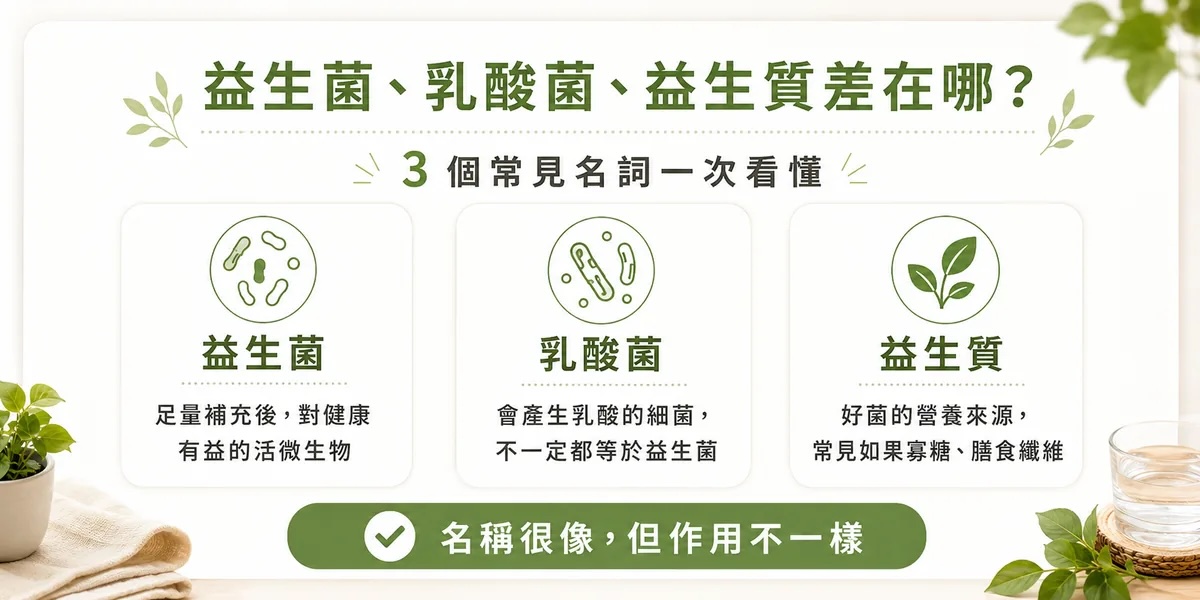
What are probiotics? Are they the same as lactic acid bacteria or prebiotics?
Probiotics are live microorganisms that, when ingested in sufficient quantities, can bring health benefits to the human body. Lactic acid bacteria, on the other hand, are a group of bacteria that produce lactic acid, and only some strains of them are used as probiotics after research. In other words, lactic acid bacteria are not necessarily directly equivalent to probiotics.
Besides probiotics, product packaging often features terms like prebiotics, metabiotics, and symbiotics. Prebiotics are nutrient sources that beneficial bacteria can utilize; common components include fructooligosaccharides, galactooligosaccharides, chicory fiber, and other dietary fibers. Metabiotics are metabolites produced by microorganisms or processed bacterial components, and are not entirely identical to live probiotics. Symbiotics typically combine probiotics and prebiotics in the same formula.
The addition of probiotics, prebiotics, and postbiotics to a product only indicates a more diverse formula; it doesn't necessarily mean the product is more suitable for you than a single-strain product. Ultimately, you should consider the intended use, the strain information, and the actual formula.
Why can probiotics, even though they are called probiotics, have different effects?
"Bacterial strain" and "bacterial strain" are two concepts that are most easily confused when choosing probiotics. You can think of a bacterial strain as a large family, and a strain as a member of the family with different identification cards. Even from the same bacterial strain, different strains may have different acid resistance, research directions, and dosages.
For example, if a product only labels itself as *Lactobacillus rhamnosus*, the information provided is still incomplete. If it were further labeled as *Lactaseibacillus rhamnosus GG*, the "GG" would be the strain number. The World Gastroenterology Organization's probiotic guidelines also emphasize that clinical application must be linked to a specific strain or combination of strains; research results from a single strain cannot be directly applied to all probiotic products.
This is why we do not recommend making a purchase decision based solely on claims such as "contains 20 types of beneficial bacteria" or "added 100 billion bacteria."
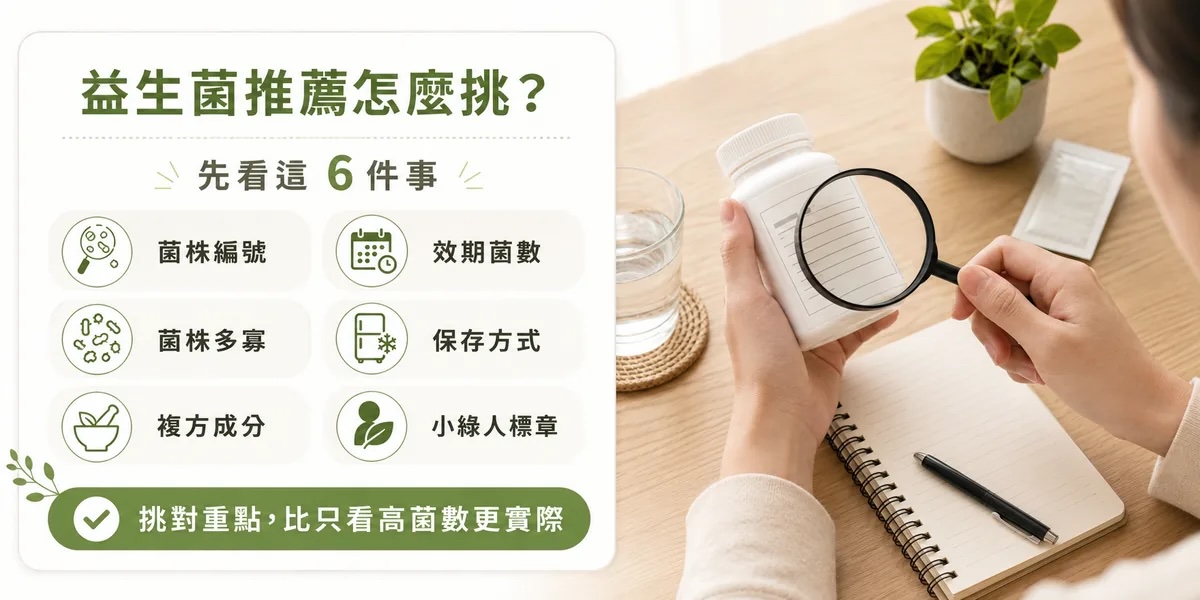
How to choose probiotics? Consider these 6 things first.
1. Are the strain numbers clearly labeled?
A well-informed probiotic product will typically disclose the genus, species, and strain number. The strain number can be used to trace related studies, safety data, and recommended usage. Simply stating "lactic acid bacteria," "Bifidobacterium," or "patented beneficial bacteria" provides relatively limited information for judgment.
Patents are not a guarantee of effectiveness. Having a patent may mean that the strain, process, or formula is protected by specific rights; what is truly relevant to human health is whether there are human studies that meet the intended use of the strain.
2. Is the bacterial count the factory output number or the expiration date guarantee number?
Probiotic counts are usually expressed in CFU, or colony-forming units. 10 billion, 30 billion, or 100 billion may seem like a big difference, but if a brand only provides the initial bacterial count during manufacturing without specifying how many live bacteria will remain by the product's expiration date, the number's reference value will be diminished.
Taiwan's Food and Drug Administration (FDA) reminds consumers that if a product lists its bacterial count, they should ensure that the number of live bacteria remains within the listed range until the expiration date. A high bacterial count does not necessarily mean greater effectiveness, nor does it mean that everyone needs the same dosage.
When comparing products, you can prioritize viewing:
- How many live bacteria are in each serving?
- The number indicates whether it represents the bacterial count at the time of manufacture or the bacterial count guaranteed for the expiration date.
- It is recommended to eat several servings each day.
- Whether the strain is consistent with the dosage used in related studies.
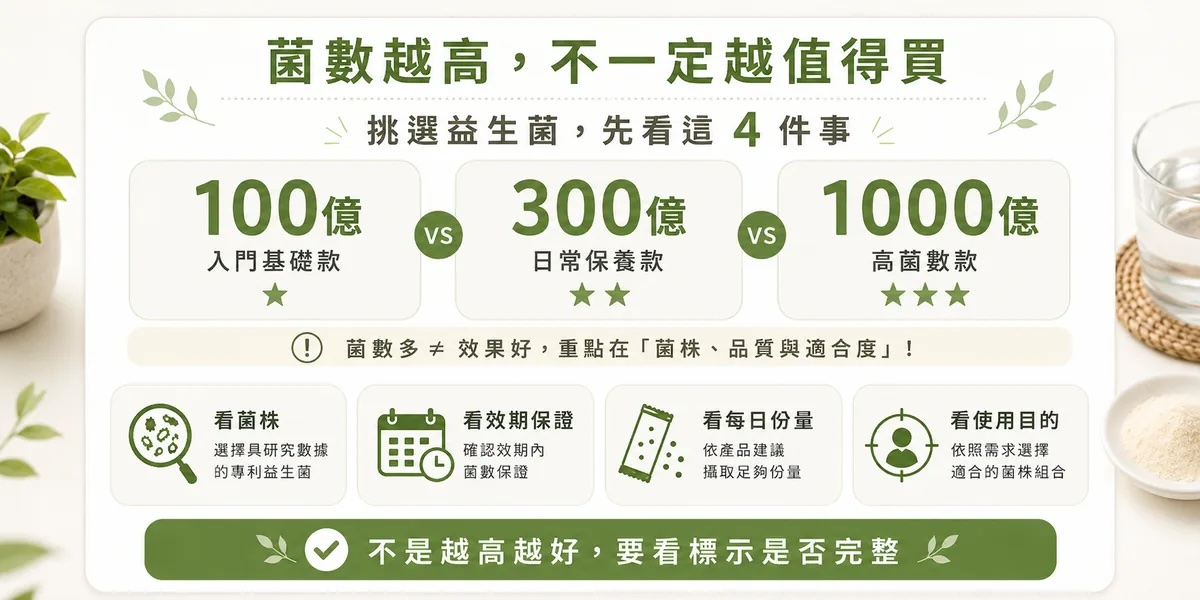
3. More strains are not necessarily better.
Some products emphasize a single core strain, while others incorporate more than a dozen strains at once. The advantage of a single strain is that the formulation is relatively simple, making it easier to control studies based on that strain. Compound strains may offer combinations of different strains, but this requires that the formulation ratios, strain identities, and research data be sufficiently clear.
When choosing a product, don't be fixated on having as many strains as possible. If a product contains many strains but doesn't disclose the strain number, individual dosage, or shelf-life count, even the most elaborate list of strains will make it difficult for consumers to make a judgment.
4. Does the storage method suit your lifestyle?
The tolerance of probiotics to temperature, humidity, oxygen, stomach acid, and bile salts varies depending on the strain and manufacturing process. Some products require refrigeration, while others utilize freeze-drying or encapsulation technology and can be stored in a cool, dry place. Neither method is inherently better or worse; the key is whether you can store them according to the brand's instructions.
People who frequently travel for work, spend long hours in the office, or easily forget to put products back in the refrigerator should prioritize products that can be stored at room temperature and are individually packaged. Even if it is labeled for room temperature storage, it does not mean that it can be left in a hot car, near a window, or in a humid environment for a long time.
5. Understanding compound ingredients and additives
To improve taste and texture, powdered probiotics often contain added fruit juice powder, sugar, sweeteners, or flavorings. Some products also include fructooligosaccharides, galactooligosaccharides, chicory fiber, digestive enzymes, vitamins, minerals, or colostrum protein. These ingredients are not necessarily bad, but more does not necessarily mean more value.
If you are lactose intolerant, have food allergies, need to control your sugar intake, or simply dislike overly sweet tastes, you should check the complete ingredient list and allergen label before purchasing. Those who only intend to supplement their daily diet can prioritize products with simple ingredients, transparent labeling, and that they are willing to consume long-term.
6. Check if it has a health food label.
Not all health supplements sold in Taiwan are health supplements as defined by the Health Food Management Act. Only products that have been inspected and registered by the Ministry of Health and Welfare and have obtained the little green man logo can legally claim approved health benefits.
When you see the little green man logo, you should further check which health benefit the product is certified to have. Don't extrapolate claims like "improved gastrointestinal function," "immune regulation," or "assistance in adjusting allergic constitution" to the treatment of diseases. The absence of the little green man logo doesn't mean the product cannot be sold; it simply means it cannot claim to have obtained specific health food efficacy certifications.
2026 Probiotic Recommendations: Comparison of 10 Popular Products
The following products are listed based on market visibility and publicly available information; the order does not represent a ranking of medical efficacy. Different products have different target markets, strains of bacteria, and are suitable for different groups; no single product is suitable for everyone.
Comparison Table of Specifications and Features of 10 Probiotic Products
This table helps you quickly compare product dosage forms, published bacterial counts, and formulation features. Actual specifications should be based on the product packaging and the brand's latest announcements.
| Product Name | Dosage form | Public bacterial count | Main features | Suitable choice scenarios |
|---|---|---|---|---|
| Purideon High-Efficiency 20 Billion Probiotics | capsule | 20 billion | 10 types of probiotics, combined with vitamin D and plant fiber | Those who dislike sweet powder packets and prefer capsules |
| Da Yan Biomedical Soothing Probiotics | capsule | 30 billion | AP88 and other probiotic strains, combined with fructooligosaccharides | Those who value portability and formula information |
| Formosa Comfort Probiotics | powder packet | 10 billion | Nine types of compound probiotics, with added pineapple enzymes and other ingredients. | Powder Packaging and Compound Product Designers |
| Mother's Home Probiotics | powder packet | 6 billion | With NTU 101 strain as the core | Pay attention to specific strains and family supplements. |
| Uni-President LP33 Probiotic Capsules | capsule | 2.5 billion | LP33 and other strains have health food licensing information. | Those who care about the little green man badge |
| Centrum Triple Action Probiotic | powder packet | 5 billion | Multiple probiotics, prebiotics and pineapple enzymes | People who eat out frequently and consume few fruits and vegetables |
| Miaoli San Japanese Active Probiotics | powder packet | 500 million | Use Miyairi 588 | Looking for specific strains and simple formulations |
| Yangming Biomedical Family Probiotics | powder packet | Please refer to the latest packaging. | YMB520 strain, combined with ingredients such as chicory fiber | Preferred daily supplement for the whole family |
| Puzhong Kangerxi Probiotic Granules | powder packet | 70 billion units shipped | 13 strains of lactic acid bacteria, pineapple flavor | Those who value taste and are accustomed to taking supplements in multiple doses |
| Grape King Probiotic King | powder packet | 15 billion | 7 types of probiotics, 3 types of prebiotics and pineapple enzymes | Those who prefer multi-strain compound preparations |
(The mobile version of the table can be swiped left and right)
Probiotic Recommendation 1: Purideon High-Efficiency 20 Billion Probiotics
Prednisolone's highly effective 20 billion CFU probiotic capsules contain 10 strains of probiotics, along with vitamin D and dietary fiber. The capsules lack the sweetness commonly found in powder packets, making them suitable for those who dislike fruit juice flavoring or prefer a single daily capsule for optimal results.
When purchasing, you can further confirm the complete strain number and whether 20 billion is the factory count or the guaranteed count within the shelf life. If long-term replenishment is required, you should also convert the number of capsules per bottle to the daily consumption amount to see the actual cost.
Reasons for recommendation: Capsules are convenient, and the bacterial count is clearly disclosed, making them suitable for people who don't like the taste of powder packets.
Purchase reminder: Please confirm complete strain information, expiration date, bacterial count, and capsule ingredients.
Purchase Link: Go to the official Purity purchase page
Probiotic Recommendation 2: DaYan Biomedical Soothing Probiotics
DaYan Biomedical's Soothing Probiotics come in capsule form and use multiple strains of probiotics, including AP88, combined with fructooligosaccharides. The advantage of this product isn't just about increasing the bacterial count, but rather its relatively clear product positioning and focus on specific strains. The capsules are also convenient to carry in the office or while traveling, eliminating the need to tear open powder packets daily.
It is important to note that although the product name contains "Soothing," health supplements cannot replace allergy-related diagnosis, medication, or medical treatment.
Recommended because: Capsules are convenient to carry and suitable for office workers who don't like sweet powder packets.
Purchase reminder: Confirm the bacterial count labeling method, applicable age, and latest formula.
Purchase Link: Visit the official purchase page of Dayen Biomedical
Probiotic Recommendation 3: Formosa Comfort Probiotics
Formosa's Soothing Probiotics comes in a powder pack design, and publicly available information indicates that it contains 9 types of compound probiotics, with 10 billion bacteria per pack. In addition to probiotics, the formula also includes pineapple enzymes, white kidney bean extract, persimmon extract, and vitamin C, making it a product with a relatively high concentration of compound ingredients.
These types of products are suitable for people who want to supplement with multiple ingredients at once and can accept the taste of powder packets. Conversely, if you only want probiotics with simple ingredients, you should first make sure that these additional ingredients are actually what you need.
Reasons for recommendation: The powder packets are convenient to use, and the formula includes a variety of ingredients.
Purchase Tips: Pay attention to the source of sweetness, complete list of additives, and allergen information.
Purchase Link: Visit Formosa Biomedical's official purchase page
Probiotic Recommendation 4: Niangjia Probiotics
Niangjia Probiotics uses NTU 101 strain as its core, combined with isomaltooligosaccharide, and is sold in powder packets. Compared to products that add more than a dozen strains at once, this one takes a specific core strain approach. For those who value the source of the strain, research background, and product information, it is easier to find relevant information about NTU 101.
Powder packets are generally more palatable to children or the elderly who cannot swallow capsules. However, young children, pregnant women, and individuals with specific medical conditions should consult a doctor or nutritionist before consuming these products, following the product label instructions.
Reason for recommendation: The core strain is clearly defined, making it suitable for people who care about information on specific strains.
Purchase Tips: Please check the recommended dosage for different age groups and the ingredients for any allergens.
Purchase Link:Go to the official direct sales channel of the parent company
Probiotic Recommendation 5: Uni-President LP33 Probiotic Capsules
Uni-President LP33 Probiotics uses strains such as LP33 and has specific health food licensing information. It is more suitable for people who care about the Taiwan Green Man logo and prefer capsule products.
However, the presence of the green man logo does not mean the product can treat allergies or replace medication. Consumers should still check the product's approved health benefits, recommended daily intake, and any relevant warnings.
Reasons for recommendation: It has health food licensing information, and the capsules are easy to carry.
Purchase reminder: Please confirm the latest approved content, storage method, and consumption suggestions.
Purchase Link: Go to the official Uni-President website purchase page
Probiotic Recommendation 6: Centrum Triple Action Probiotic
Centrum Triple Action Probiotic comes in a powder packet format and publicly available information indicates it contains 7 types of probiotics, along with added prebiotics and bromelain. The product label states that it has 5 billion bacteria at the end of its shelf life. This product is more suitable for people who frequently eat out, consume less vegetables and dietary fiber, and prefer powder packets.
However, the presence of prebiotics or dietary fiber in the formula does not mean it can completely replace vegetables, fruits, legumes, and whole grains. Gut health should still be maintained through a regular diet; health supplements can only play a supplementary role.
Reason for recommendation: It provides probiotics, prebiotics, and enzymes at the same time, and the information on the expiration date and bacterial count is more valuable for judgment.
Purchase Tips: Check the sweetness, flavoring, daily sugar content, and recommended age.
Purchase Link: Go to Centrum brand purchase page
Probiotic Recommendation 7: Miaoli San Japanese Active Probiotics
Miaoli San uses Clostridium butyricum MIYAIRI 588, unlike common Lactobacillus and Bifidobacterium products. Its formula is relatively concentrated, making it suitable for those who want to find a specific strain or do not want to ingest too many compound ingredients at once.
Different products sold in Taiwan may involve different product categories and usage methods. When purchasing, be sure to check the Chinese label, license information and recommended dosage, and do not directly increase the dosage based on online reviews.
Reason for recommendation: It uses specific strains, and the formulation direction is relatively clear.
Purchase reminder: Please confirm the product category, Chinese labeling, and correct dosage of the items you are buying.
Purchase Link: Visit the official Miaoli San product page
Probiotic Recommendation 8: Yangming Biomedical Family Probiotics
Yangming Biomedical's Family Probiotics feature the YMB520 strain and are formulated with ingredients such as camu camu, tremella, chicory fiber, and yeast zinc, packaged in powder form. The product is positioned for daily supplementation by the whole family and is suitable for those who prefer powder form and want a formula that contains both prebiotics and other nutrients.
The bacterial count information on different sales pages may not be completely consistent. Before purchasing, it is recommended to check the product box directly to confirm the bacterial count, expiration date, applicable age, and recommended consumption method.
Reasons for recommendation: The powder packets are convenient, and the product is positioned as a daily supplement for the whole family.
Purchase reminder: Before purchasing, please confirm the latest bacterial count and complete strain label.
Purchase Link: Visit Yangming Biomedical's official purchase page
Probiotic Recommendation 9: Puzhong Kangerxi Lactic Acid Bacteria Granules
According to publicly available information, Puzhong Kangerxi probiotic granules contain 13 strains of probiotics, with a live bacteria count of 70 billion at the time of manufacture, and are packaged in pineapple-flavored powder packets. While the bacterial count appears high, comparisons should not solely rely on 70 billion; the recommended daily number of packets, the expiration date's bacterial count, and daily cost must also be considered.
Pineapple flavor might be more appealing to children or those who dislike capsules. However, parents should still check the information on sugar, flavorings, sweeteners, and allergens, and consume the product according to the recommended age.
Reason for recommendation: The taste may be more acceptable, suitable for people who are used to powder packets.
Purchase reminder: 70 billion is the number of bacteria at the factory; you should also check the expiration date, the number of bacteria, and the total daily intake.
Purchase Link: Visit the official purchase page of [website name - likely a gambling site]
Probiotic Recommendation 10: Grape King New Probiotic King
Grape King Probiotic King contains 7 types of probiotics, 3 types of prebiotics, and pineapple enzymes. It comes in a powder packet and has a publicly disclosed bacterial count of 15 billion. It is suitable for people who prefer Taiwanese brands and want to supplement with multiple strains of probiotics, prebiotics, and digestive enzymes at once.
A large number of ingredients is not necessarily a disadvantage, but people with food allergies, who need to control their sugar intake, or who do not like seasoning packets should still carefully check the complete labeling before purchasing.
Reasons for recommendation: It contains a complete combination of probiotics, prebiotics, and enzymes, and the powder packets are easy to consume.
Purchase Tips: Pay attention to additives, flavor, and recommended daily intake.
Purchase Link: Visit the official Grape King shopping website
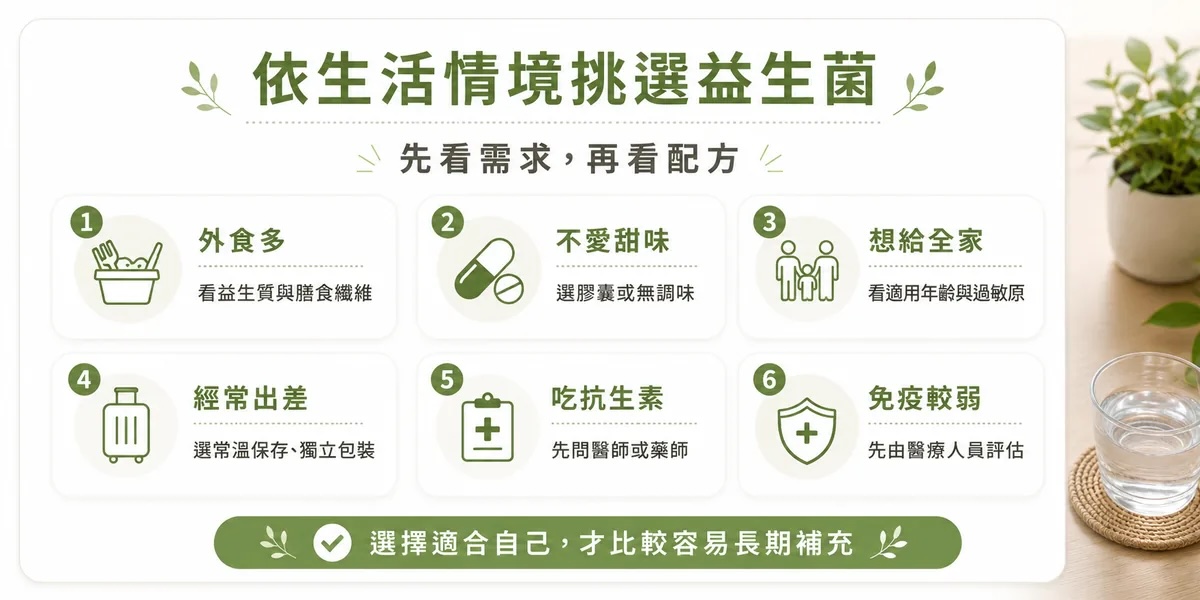
Don't know which to choose? Quickly judge based on life situation.
Probiotic Selection Guide for Different Needs
This table is not a medical diagnostic tool, but rather a tool to help you narrow down your product options.
| Use Cases | View first | Purchase Reminder |
|---|---|---|
| Frequent eating out and irregular bowel movements | Digestive tract-associated bacteria, prebiotics and dietary fiber | At the same time, increase water intake, vegetables, and whole grains. |
| Seasonal changes can easily cause discomfort | Specific strains for human studies | Don't just look at the words "sensitive," "protective," and "shield" in the product name. |
| I don't like sweet taste | Capsules or unflavored products | Confirm capsule material and daily dosage |
| I want to supplement the family's diet | Suitable age, allergens and methods of consumption | Adult products are not necessarily suitable for infants and young children. |
| Frequent business trips | Store at room temperature and in individual packaging | Avoid leaving the car in a high-temperature environment for extended periods. |
| During antibiotics | Consult a doctor or pharmacist first. | It may be necessary to avoid taking it with antibiotics. |
| People with chronic diseases or weak immune function | First, medical personnel will assess the situation. | Do not try products with high bacterial counts on your own. |
(The mobile version of the table can be swiped left and right)
When is the best time to take probiotics?
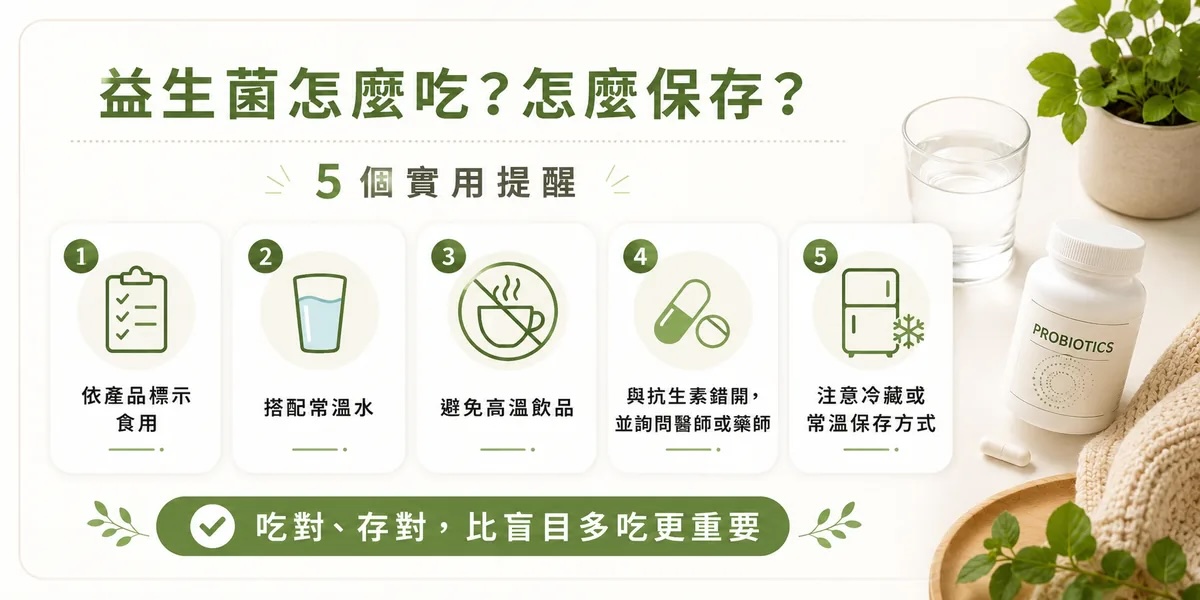
There is no single best time to consume all probiotic products. Some products recommend taking them on an empty stomach, others after meals, and still others can be taken before or after meals. This depends on the acid resistance of the strains, the encapsulation method, and the formulation design. The safest approach is to follow the product label's instructions.
Instead of constantly agonizing over whether it's morning or evening, it's more practical to choose a time that's easy for you to remember each day.
Probiotics are live microorganisms, and it is generally not recommended to add them directly to hot beverages. If the product needs to be refrigerated, please store it according to the packaging instructions and do not refrigerate it yourself.
Can probiotics be taken with antibiotics?
Some people may want to supplement with probiotics while taking antibiotics. Antibiotics can affect different bacteria simultaneously, so probiotics and antibiotics usually need to be taken at different times. However, the approach may vary depending on the type of antibiotic, probiotic strain, and individual health condition.
The safest approach is to bring the probiotic product packaging with you and directly ask your prescribing doctor or pharmacist. Do not replace your medication with probiotics or change your original antibiotic treatment based solely on online articles.
How long do I need to take probiotics before I know if they are suitable for me?
Don't expect to feel the effects immediately after taking it today. Everyone's diet, lifestyle, stress levels, gut microbiota, and intended use are different, so the speed at which you feel the effects after supplementation may vary.
You can first continue to supplement according to the product's recommended amount for a period of time, and record the following:
- Number of bowel movements per week.
- Fecal form.
- Abdominal bloating or flatulence.
- Do you experience diarrhea, abdominal pain, or other discomfort?
- Do your diet, water intake, and sleep patterns change in sync?
It's also not recommended to mix three or four brands at once. This not only increases costs, but also makes it difficult to determine which product is causing the problem if symptoms or discomfort occur. If continued supplementation doesn't meet expectations, first check the method of consumption, storage conditions, and dietary habits before assessing whether to switch products.
Who should consult a healthcare professional before taking probiotics?
Generally, healthy adults who supplement with probiotics according to the product label usually do not need to worry excessively. However, the following groups are advised to consult a doctor, pharmacist, or nutritionist before consuming these products:
- Infants and premature infants.
- Pregnant women and breastfeeding women.
- People with weakened immune systems.
- Those who are currently undergoing chemotherapy or major treatments.
- Those with serious illnesses or who have recently undergone surgery.
- People who are currently using antibiotics or multiple medications.
- People who are allergic to milk, soy, eggs or other ingredients.
If you already have chronic diarrhea, severe constipation, bloody stools, persistent abdominal pain, recurring fever, or unexplained weight loss, it is not recommended to rely solely on probiotics to manage the condition. You should first consult a doctor for evaluation.
Can natural foods replace probiotic supplements?
Yogurt, fermented dairy products, kimchi, miso, and other fermented foods may contain different microorganisms, but not all of them have clear information on the probiotic strains, quantities, and shelf life.
The advantage of supplements is that the strains, dosages, and storage methods are usually easier to trace. The value of natural foods lies in their ability to provide protein, vitamins, minerals, dietary fiber, and other nutrients simultaneously.
You don't necessarily have to choose one over the other. If you simply want to maintain a diverse daily diet, you can start with vegetables, fruits, whole grains, legumes, and a moderate amount of fermented foods. If you have a specific purpose for supplementation, then choose products with clearly defined bacterial strains and dosage information.
The real key to recommending probiotics is not finding the best one for everyone.
No single probiotic is suitable for everyone. Some people are concerned about bowel movements, while others are concerned about adjusting their constitution during seasonal changes; some can swallow capsules, while others prefer powder packets. Some people eat breakfast at home every day, while others travel frequently for work, even their storage environments differ. Instead of chasing after the highest bacterial count or the most strains, it's better to first identify your own needs, and then check the strain number, expiration date, bacterial count, storage method, and complete ingredient list.
Honestly, the willingness to supplement daily, the affordability over the long term, and the lack of adverse reactions are usually more practical than the staggering figures on the packaging. Diet shouldn't be entirely left to health supplements. Vegetables, fruits, whole grains, legumes, sufficient water intake, and appropriate amounts of fermented foods remain the essential foundation for maintaining a healthy gut microbiota.
Probiotics can be a supplement, but they shouldn't be the only remedy after staying up late, sitting for long periods, eating out, or not drinking enough water.
Recommended probiotics: key points summarized
- The effects of probiotics vary depending on the strain; one cannot rely solely on the strain name.
- A higher bacterial count is not necessarily better; you need to confirm whether it is the factory count or the count guaranteed before the expiration date.
- Patents, encapsulation techniques, and multiple strains are only reference conditions and do not represent a guarantee of effectiveness.
- Choose according to needs, dosage form, storage method, and daily cost, making it easier to supplement for a long time.
- Those with chronic diseases, weakened immune function, or persistent gastrointestinal symptoms should consult a medical professional first.
Probiotic Recommendations and Frequently Asked Questions
Q1. Can I take probiotics every day?
Generally healthy adults can consume the product as indicated on the label. However, different products have different strains, bacterial counts, and formulations, so it is still necessary to follow the recommended dosage. People with special medical conditions, weakened immune systems, pregnant women, infants, or those currently taking medication are advised to consult a doctor or pharmacist first.
Q2. Does a higher count of probiotics mean greater effectiveness?
Not necessarily. The effectiveness of probiotics depends on the strain, intended use, dosage, and storage stability. Simply indicating a high bacterial count without disclosing the strain number or expiration date limits its diagnostic value.
Q3. Should probiotics be taken before or after meals?
Please refer to the product label. Different strains and manufacturing processes have varying acid resistance; therefore, the same consumption time cannot be applied to all products. Choosing a time that is easy to remember each day is usually more practical than frequently changing the consumption time.
Q4. Can probiotics be mixed with coffee or hot water?
It is generally not recommended to add probiotics directly to hot beverages, as this may affect the live bacteria. They can be consumed with room temperature water, but the actual temperature and method of consumption should still follow the instructions on the product packaging.
Q5. Can probiotics be taken with antibiotics?
In some cases, supplementation can be done, but it usually needs to be staggered at different times, and the combination of different antibiotics and probiotics is not entirely the same. It is recommended to consult the prescribing doctor or pharmacist directly and not to adjust the course of medication on your own.
Q6. How long does it take for probiotics to be effective?
Everyone's needs, diet, and physical condition are different, so there is no fixed number of days that applies to everyone. You can continue to supplement according to the product's recommended dosage and record your body's reactions. If gastrointestinal discomfort persists without improvement, you should consult a doctor to find the cause.
Q7. Can children take adult probiotics?
It is not recommended to simply reduce the dosage of adult products for children. Different products have different strains, dosages, sweeteners, allergens, and applicable age groups. Choose products labeled as suitable for children and follow the recommended dosage.
References
- The Food and Drug Administration of the Ministry of Health and Welfare teaches you how to understand the labeling when purchasing probiotic products.
- World Gastroenterology Organization, Probiotics and Prebiotics Global Guideline.
- Public information and product labels of each brand, compiled as of July 14, 2026.
You may be interested

Recommended topics
Top Charts
All articles
article keywords
Subscribe to newsletter
article outline