- front page
- Recommended Article
- Life
- Recommended Taichung Clinics for PRP Treatment | 10 Clinics with Websites for Knee Degeneration, Sports Injuries, and Chronic Pain
Recommended Taichung Clinics for PRP Treatment | 10 Clinics with Websites for Knee Degeneration, Sports Injuries, and Chronic Pain
Knee pain for months, with medication, ointments, and rehabilitation only providing temporary relief; recurring shoulder problems like stiffness, frozen shoulder, tennis elbow, golfer's elbow, and plantar fasciitis making even climbing stairs, squatting, standing for long periods, or exercising difficult. At this point, you might start hearing about "PRP injections" from doctors, friends, or online articles. This article isn't about recommending any clinic that "guarantees effectiveness," nor is it about packaging PRP as a miracle cure. PRP is commonly used in assessing joint degeneration, tendon and ligament injuries, sports injuries, and chronic pain, but its suitability depends on the cause of the pain, the severity of the injury, imaging results, the doctor's judgment, and the subsequent rehabilitation plan.
What is PRP? Why would someone with knee pain or a sports injury consider PRP?
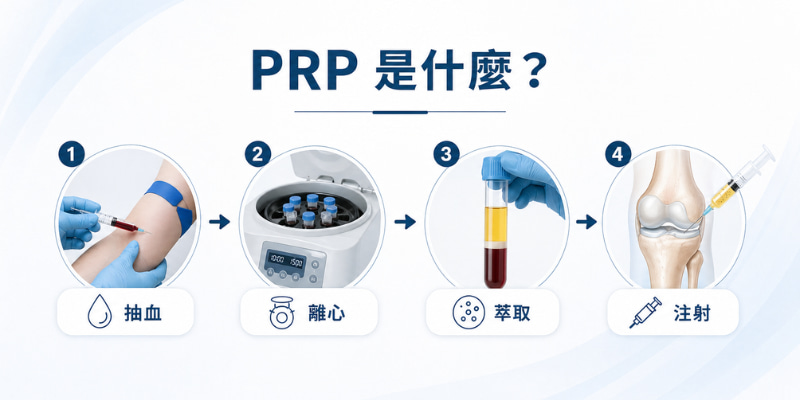
PRP is an abbreviation for Platelet-Rich Plasma, often referred to as "high-concentration platelet plasma" or "autologous platelet plasma." Simply put, it involves drawing your own blood, centrifuging it to extract plasma with a high platelet concentration, and then injecting it into the joints, tendons, ligaments, or soft tissues that need repair. PRP is used in pain management and sports injury discussions because platelets contain various growth factors related to tissue repair. In layman's terms, it's not simply a painkiller or a steroid; rather, it uses components of your own blood to attempt to initiate a repair response in local tissues.
Because PRP is "repair-oriented," it usually doesn't provide immediate pain relief after just one injection. What's truly important is: Did the doctor first identify the source of the pain? Was the injection site precise? Was it followed up with rehabilitation, strength training, posture correction, or movement control? If you just see that others have had positive results and follow suit, you might overlook your actual problem.
In what situations should you consider consulting a PRP (Performance Professional)?
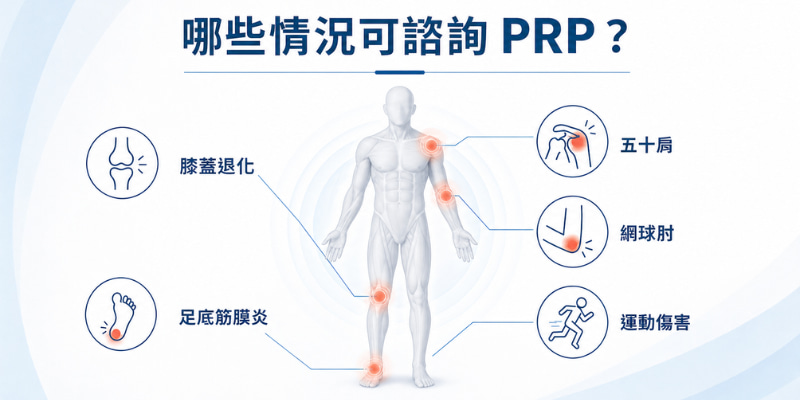
If your pain has been recurring for some time and rest, rehabilitation, medication, or topical ointments only provide temporary relief, you can consider making an appointment with a rehabilitation specialist, orthopedic specialist, or pain management clinic to have a doctor assess whether you are a suitable candidate for PRP or other regenerative therapies.
Common PRP Consultation Scenarios Summary Table:
| Your situation | Areas for consultation |
|---|---|
Knee degeneration, pain when going up and down stairs | You can consult a rehabilitation specialist or orthopedic specialist to assess the degree of knee degeneration and whether you are a suitable candidate for PRP. |
Frozen shoulder, shoulder stuck, rotator cuff injury | It can assess shoulder joint range of motion, tendon condition, and whether ultrasound-guided injection is needed. |
Tennis elbow, golfer's elbow | This can help assess whether it is chronic tendonitis, tendon degeneration, or overuse during exercise. |
Plantar fasciitis, Achilles tendon pain | It can assess soft tissue injuries of the foot and ankle, gait and long-term weight-bearing problems. |
The sports injury has not healed. | You can consult a sports medicine, rehabilitation, or orthopedic specialist to confirm whether your ligaments, tendons, or joints are damaged. |
Long-term lower back pain, neck and shoulder pain | First, you need to identify the source of the pain; not everyone is suitable for receiving PRP directly. |
Hair loss and hair regrowth needs | These are different uses, usually seen at dermatology, hair regrowth, or cosmetic clinics. It's not recommended to confuse them with joint PRP (percutaneous PRP). |
(The mobile version of the table can be swiped left and right)
The important point to remember is that PRP isn't simply about "injecting wherever it hurts." If your problem actually stems from muscle weakness, postural compensation, insufficient joint mobility, or long-term incorrect movement, a single injection may not be enough. A more comprehensive approach involves first identifying the true source of the pain through a medical history, physical examination, musculoskeletal ultrasound, or other imaging studies, before determining which method—PRP, proliferative therapy, hyaluronic acid injections, shockwave therapy, rehabilitation therapy, or another approach—is most suitable.
Who might not be a suitable candidate for PRP? Don't just rely on clinic recommendations.
PRP uses your own blood, so many people feel it "should be very safe." However, safety doesn't mean it's suitable for everyone, nor does it mean there are absolutely no risks. If you have a blood disorder, acute inflammation or infection, malignancy, abnormal blood clotting, or are using anticoagulants, you should fully inform your doctor first. These conditions don't necessarily preclude the procedure entirely, but a doctor needs to conduct an individual assessment based on your medical history, medications, and overall health condition.
In the following situations, it is recommended to consult a doctor first, and not to make a judgment on whether or not you can get vaccinated:
- Current infection, fever, localized redness, swelling, heat, and pain : Immediate injection treatment may not be suitable.
- For those with blood disorders or platelet issues : PRP requires blood preparation, and blood status can affect treatment planning.
- If you are currently using anticoagulants : This may increase the risk of bleeding or bruising and requires evaluation by a physician.
- Those with a history of malignant tumors or currently undergoing treatment should discuss this with their attending physician first.
- Autoimmune diseases : Treatment responses may vary and individual assessment is required.
- Complete rupture or fracture of tendons and ligaments : may require surgery or other treatments, and may not be suitable for PRP alone.
If the pain occurs suddenly, is accompanied by significant swelling, inability to bear weight, numbness or weakness, fever, or severe pain after an injury, do not immediately think of going to a PRP clinic. You should seek medical attention as soon as possible to check for fractures, infections, nerve compression, or other acute problems.
How to choose a clinic before getting PRP? Ask these 6 questions first.
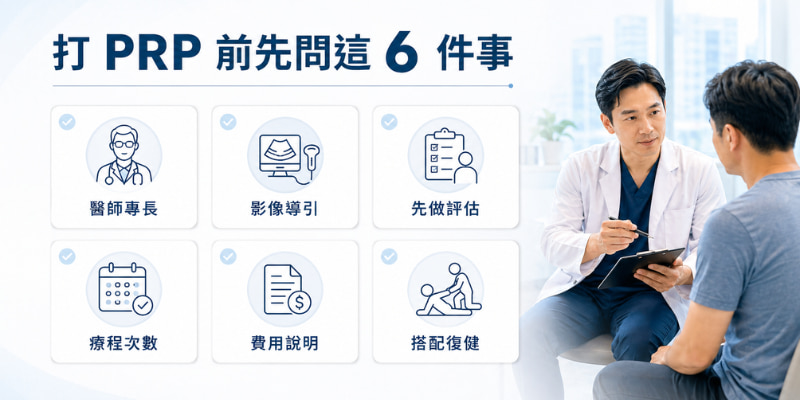
For people experiencing pain, the most appealing terms are "rapid improvement," "no surgery required," and "regenerative repair." However, PRP (Performance-Related Pain Management) is a self-funded medical procedure, so choosing a clinic shouldn't be based solely on advertisements or prices. While the cost is important, the most crucial questions are: Is this clinic a suitable fit for me? Will the clinic conduct an initial assessment? Will the doctor explain the risks, limitations, and follow-up care? These questions should be prioritized over simply comparing which clinic is the cheapest.
Questions to ask before a medical appointment and PRP treatment:
- What are the doctor's specialties and areas of expertise? (For joint, tendon, ligament, and sports injuries, you would usually consult a rehabilitation specialist, orthopedic surgeon, or a pain management specialist.)
- Is there musculoskeletal ultrasound or image guidance? (PRP is not simply a matter of injecting it; the injection site will affect the treatment plan.)
- Will you conduct examinations first before making a decision? (Different sources of pain require different treatments)
- Is PRP a single treatment or a course of treatment? (The number of treatments required varies depending on the condition, and the cost will also vary.)
- Does the fee include follow-up appointments and subsequent care? (PRP services are mostly out-of-pocket expenses, so it's recommended to ask beforehand.)
- Should rehabilitation or exercise therapy be followed up after the treatment? (If muscle strength, posture, and movement patterns are not adjusted, the pain may recur.)
In short, a good PRP assessment shouldn't just be about asking "where does it hurt?" and then directly scheduling the injection. A more complete process should include taking a medical history, confirming the location of the pain, performing musculoskeletal ultrasound or imaging examinations if necessary, and then discussing whether PRP is appropriate based on the patient's condition.
How to choose a PRP clinic in Taichung? First, consider the department, symptoms, equipment, and location.
There are many clinics in Taichung where you can consult about PRP, but each clinic has a slightly different focus. Some are more focused on rehabilitation, some on orthopedics, some on pain management, and some on proliferative therapy or regenerative medicine injections.
We recommend prioritizing whether the clinic has the following information:
- Knee degeneration and joint pain : Find a clinic that offers orthopedics, rehabilitation, joint assessment, and PRP (platelet therapy) services.
- Shoulder pain, frozen shoulder, rotator cuff : Find a clinic with experience in musculoskeletal ultrasound and shoulder joint treatment.
- Tennis elbow, golfer's elbow, plantar fasciitis : Find a clinic that offers information on tendon and ligament injuries, sports injuries, and ultrasound-guided injections.
- Chronic lower back pain, sciatica : Find a clinic that offers pain management, imaging guidance, and spinal assessment.
- If sports injuries are recurring and difficult to treat : Seek medical advice from a clinic specializing in sports medicine, rehabilitation therapy, and movement training planning.
- Unsure if PRP is right for you : Find a clinic with clear website information and a willingness to conduct an evaluation before scheduling treatment.
The following is a list of 10 clinics in Taichung that have websites where you can find information on PRP, proliferative therapy, ultrasound-guided injections, or regenerative treatments. The order below does not represent a ranking of effectiveness, nor does it mean it's suitable for everyone. We recommend you choose based on your symptoms, location, doctor's evaluation, and appointment schedule.
A list of 10 recommended PRP clinics in Taichung
1. Recommended PRP clinic in Taichung: Pro Clinic
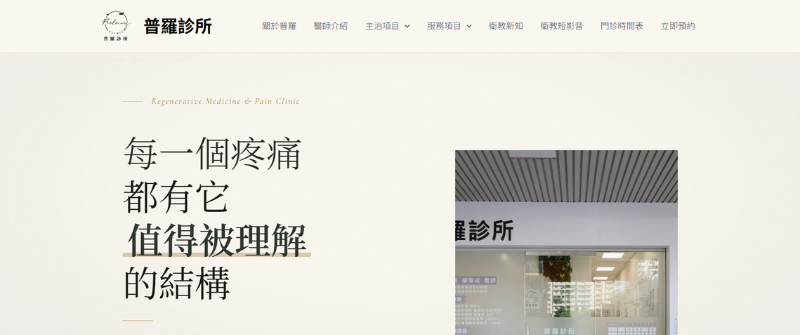
ProClinic is located in Nantun District, Taichung. Its website focuses on pain medicine, regenerative therapy, proliferative therapy, and sports injury treatment. For those looking for "Taichung PRP," "Taichung proliferative therapy," or "chronic pain treatment," ProClinic's website offers relatively comprehensive information, including PRP indications, treatment procedures, post-operative care, and key factors for effectiveness.
If your pain is not just a simple localized soreness, but has been recurring for a long time, such as knee degeneration, sports injuries, shoulder, neck, back pain, or tendon and ligament injuries, you can add clinics that emphasize pain cause assessment and regenerative treatment planning to your consultation list.
- Suitable for : People with chronic pain, sports injuries, degenerative joints, and tendon and ligament pain.
- Location : Nantun District
- Pre-visit advice : First, determine the location of your pain, the duration of the pain, and any previous treatments to help the doctor assess whether PRP is a suitable option.
- Official website link : https://prolocare.tw/
2. Recommended PRP clinic in Taichung: Revive Clinic (Youli Clinic)
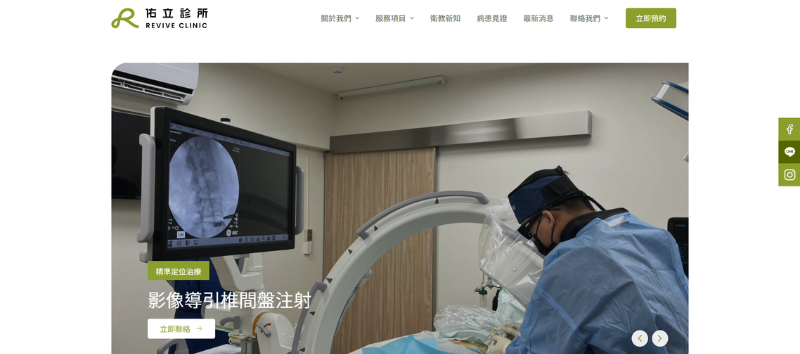
Yu-Li Clinic, located in Beitun District, Taichung, specializes in both pain management and rehabilitation. Their website mentions PRP regenerative therapy, ultrasound imaging, and also provides information on proliferative therapy, shockwave therapy, and image-guided therapy. For individuals experiencing complex pain locations, or recurring lower back pain, sciatica, or joint pain, this type of integrated pain and rehabilitation clinic is worth considering.
The Yuli Clinic website also emphasizes the importance of accurate diagnosis and precise treatment, which is a good reminder to readers: PRP is not only about the medication itself, but also about determining the injection site and the source of pain.
- Who is this suitable for : those with joint pain, chronic pain, sciatica, and those who require image-guided assessment?
- Location : Beitun District
- Pre-visit advice : If the pain involves the lumbar spine, nerves, or multiple areas of discomfort, please prepare your past imaging examination data in advance.
- Official website link : https://reviveclinic.tw/
3. Recommended PRP clinic in Taichung: Orthopedic surgeon Tsai Yi-Chun
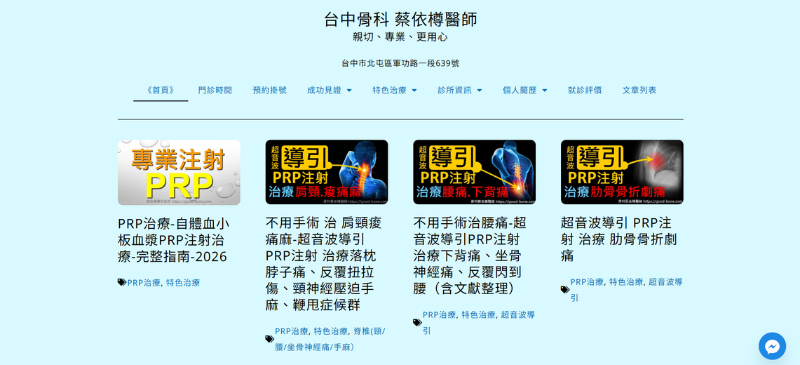
Dr. Tsai Yi-Cun's website is comprehensive, listing information on PRP (platelet-rich plasma) injections, knee degeneration, arthritis, frozen shoulder, tennis elbow, golfer's elbow, cervical and lumbar spine injuries, and sports injuries. It also emphasizes ultrasound-guided PRP injections.
If your problem is more orthopedic, such as knee degeneration, meniscus injury, shoulder pain, elbow pain, plantar fasciitis, or if you are already looking to have an orthopedic doctor evaluate your PRP, you can include Tsai Yi-Chun Orthopedics in your comparison list.
- Suitable for : People with knee degeneration, frozen shoulder, tennis elbow, golfer's elbow, and sports injuries.
- Location : Beitun District
- Pre-visit advice : If you have X-rays, MRI scans, ultrasounds, or previous orthopedic diagnoses, please bring them with you.
- Official website link : https://www.good-bone.com/
4. Recommended PRP clinic in Taichung: Vitality Rehabilitation Clinic
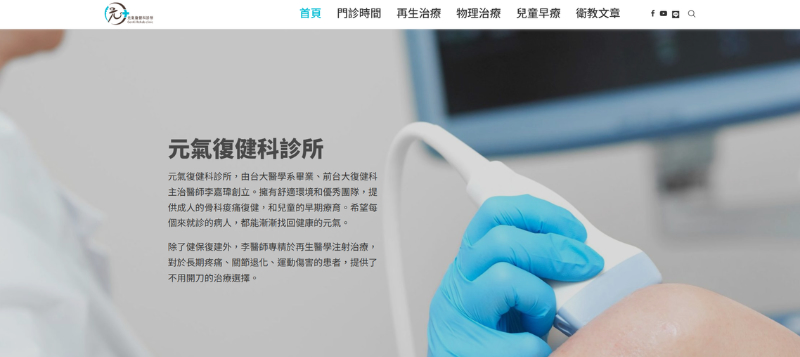
The website of Yuanqi Rehabilitation Clinic mentions that it provides regenerative PRP injections for long-term pain, sports injuries, or joint degeneration, and sets up soft tissue ultrasound to help examine problems such as muscles, tendons, ligaments, and nerves, and then completes the regenerative injection treatment with ultrasound guidance.
These types of clinics are ideal for people who are unsure whether they need PRP (percutaneous pulse diagnosis). Pain isn't always caused by a single factor; it can be related to muscle weakness, joint range of motion, overuse, or postural compensation. Rehabilitation clinics that can provide assessment, injections, and follow-up rehabilitation are particularly helpful for people with chronic pain.
- Who is this suitable for : People with chronic pain, joint degeneration, sports injuries, or those who want to undergo a rehabilitation assessment first?
- Location : Nantun/West District living area
- Pre-visit suggestion : You can first record the context in which the pain occurs, such as pain when going up or down stairs, pain when running, pain when sitting for a long time, or pain when turning over in bed.
- Official website link : https://genki-rehab.com/
5. Recommended PRP clinic in Taichung: Gaoming Rehabilitation Clinic
Kao Ming Rehabilitation Clinic is located in Nantun District. Its website has a separate Taichung PRP page, which clearly lists the phone number, address, and parking information. It also reminds that PRP is currently not covered by health insurance and must be paid out of pocket. Whether it is suitable for treatment should be consulted with the rehabilitation clinic.
This type of information is very useful for those who are learning about PRP for the first time. Many people are concerned not only about the effectiveness, but also about the cost, the procedure, whether follow-up appointments are needed, whether there will be pain after the procedure, and whether they can return to work. The information on the Gaoming Rehabilitation Clinic's website can serve as a preliminary understanding before a consultation.
- Who is this suitable for : People who want to understand the PRP process, out-of-pocket treatments, and rehabilitation assessments.
- Location : Nantun District
- Pre-visit advice : Before making an appointment, you can inquire about the PRP assessment method, cost range, and post-operative precautions.
- Official website link : https://www.brilliant-clinic.com.tw/
6. Recommended PRP clinic in Taichung: Kaisheng Rehabilitation Clinic
Kaisheng Rehabilitation Clinic is located in Beitun District. Its website has a Taichung PRP page, which focuses on PRP proliferative therapy and the improvement of muscle and bone pain. It also mentions that rehabilitation treatment does not immediately solve pain, but gradually improves physical condition through correct and effective treatment.
This perspective is helpful in reminding readers that PRP shouldn't be thought of as a "one-time fix." Chronic musculoskeletal pain, in particular, often involves movement habits, muscle strength, joint stability, and tissue repair time. If you've been experiencing long-term musculoskeletal pain and limited rehabilitation effectiveness, you can add Triumph Rehabilitation Department to your consultation list.
- Who is this suitable for : People with muscle and joint pain, chronic pain, and those who want to combine rehabilitation therapy?
- Location : Beitun District
- Pre-visit advice : If you have received rehabilitation or injection treatments in the past, it is recommended to prepare your treatment records for the doctor's reference.
- Official website link : https://www.kaihsuanrehab.com.tw/
7. Recommended PRP clinic in Taichung: Haokang Health Clinic
Good Health Clinic is located in Beitun District. Its website introduces PRP as platelet-rich plasma, which is often used for soft tissue repair, and mentions combining it with ultrasound-guided injection. The website also states that there may be soreness within a week after injection, and warns that PRP is not recommended for patients with blood diseases, immune diseases, or cancer.
This type of information is important to readers because many people only care about "whether it will be effective after the injection," but they should actually know "what reactions might occur after the injection" and "who is not suitable for it." If you would like to learn about the basic principles, side effects, and precautions of PRP from a website, Good Health and Wellness Clinic is a good place to compare.
- Who is this suitable for : People with soft tissue pain, those who want to understand the risks and postoperative reactions of PRP?
- Location : Beitun District
- Pre-visit advice : If you have a history of immune disorders, cancer, or blood disorders, be sure to inform your doctor beforehand.
- Official website link : https://www.hk901.com.tw/
8. Recommended PRP clinic in Taichung: Yingtai Rehabilitation Clinic
Yingtai Rehabilitation Clinic is located in Nantun District. Its website mentions ultrasound-guided injection therapy in its treatment program. It explains that before the injection, a soft tissue ultrasound examination will be conducted to confirm the lesion and its location. During the injection, the medication will be injected into the lesion using ultrasound guidance. The applicable injection agents include PRP injection solution.
If you care about whether an examination is performed before injection, clinics like Yingtai Rehabilitation Clinic, which emphasize soft tissue ultrasound and ultrasound-guided injection, are worth considering. Especially for pain around tendons, ligaments, and joints, the accuracy of the injection site will affect the overall treatment plan.
- Who is this suitable for : people with sports injuries, tendon and ligament pain, and those who want to undergo ultrasound-guided injection evaluation.
- Location : Nantun District
- Pre-visit advice : Describe whether the pain occurs during movement, upon pressure, or even at rest to help the doctor make a diagnosis.
- Official website link : https://www.yingtaiclinic.com/
9. Recommended PRP clinic in Taichung: Enci Vitality Rehabilitation Clinic
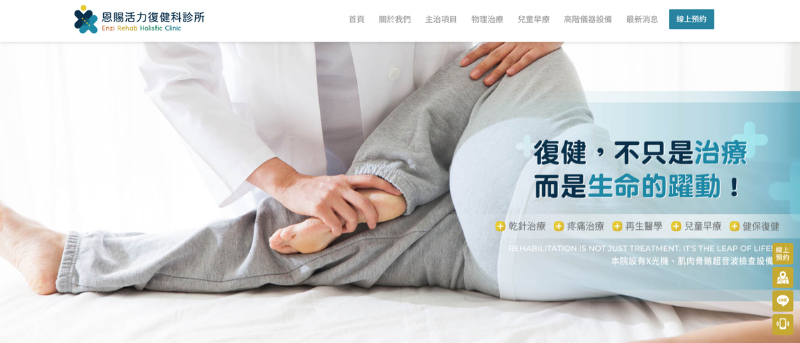
Grace Vitality Rehabilitation Clinic is located in Beitun District. Its website lists its main services as including hyperplasia treatment, dry needle therapy, PRP high-concentration platelet injection, PLT cryotherapy, health insurance rehabilitation, exercise therapy, precision manual therapy, and postoperative physical therapy.
If you live in Beitun District, or are looking for a clinic that offers information on PRP, rehabilitation therapy, exercise therapy, and manual therapy, consider adding Grace Vitality Rehabilitation Department to your list. For those with chronic pain, follow-up rehabilitation and exercise therapy are sometimes more important than a single injection.
- Who is this suitable for : People living in the Beitun area, those with chronic pain, and those who need an integration of rehabilitation and exercise therapy?
- Location : Beitun District
- Pre-visit advice : If you experience post-operative pain or poor recovery from sports injuries, you can first inquire whether a rehabilitation plan is necessary.
- Official website link : https://www.enzi-rehab.com/
10. Recommended PRP clinic in Taichung: Heng Hsin Rehabilitation Clinic, Dadun, Taichung
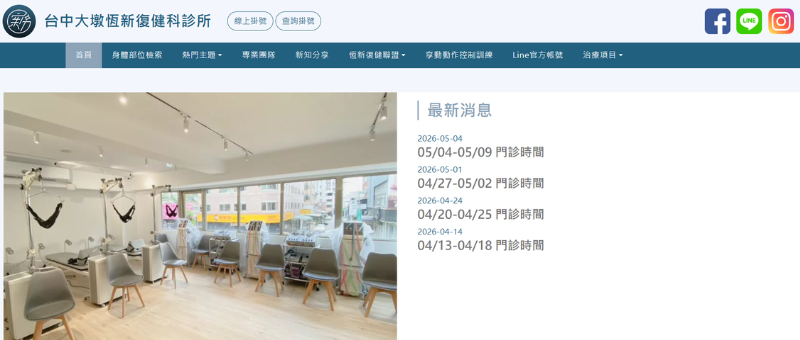
Taichung Dadun Hengxin Rehabilitation Clinic is located in Nantun District. According to its official introduction page, the doctors' expertise includes musculoskeletal joint diseases, sports injury rehabilitation, ultrasound examinations and injection treatments. It also lists services such as PRP, hyaluronic acid, and hyperplasia treatment.
If you live near Nantun, Dadun Road, Daye Road, or the Dadun commercial area and want to have a musculoskeletal joint assessment done by a rehabilitation specialist first, Dadun Hengxin Rehabilitation Clinic is worth considering. Especially if you're unsure whether to get PRP or hyaluronic acid injections, or to start rehabilitation first, it's recommended to have a doctor assess your condition before making a decision based on price or treatment name.
- Who is this suitable for : People with musculoskeletal pain, sports injuries, or those who want to consult about PRP or hyperplasia treatment.
- Location : Nantun District
- Pre-visit advice : Confirm clinic hours, appointment requirements, and PRP assessment process.
- Official website link : https://www.forcestar.com.tw/clinic/
Comparison of 10 PRP Clinics in Taichung
| Clinic Name | area | Consultation directions | Suitable for ethnic groups |
|---|---|---|---|
Pro Clinic | Nantun District | PRP, proliferative therapy, pain medicine, sports injuries | People with chronic pain, degenerative joints, and sports injuries |
Yuli Clinic | Beitun District | PRP regenerative therapy, image localization, pain and rehabilitation integration | People with joint pain, lower back pain, and sciatica |
Tsai Yi-Cun, Orthopedic Surgeon | Beitun District | PRP, autologous platelet injection, orthopedic pain, frozen shoulder | People with knee degeneration, tennis elbow, golfer's elbow, and shoulder pain |
Vitality Rehabilitation Clinic | Nantun District, West District | PRP, musculoskeletal ultrasound, regenerative injection, orthopedic rehabilitation | People with chronic pain, sports injuries, and joint degeneration |
Gaoming Rehabilitation Clinic | Nantun District | PRP, out-of-pocket treatment, rehabilitation assessment | People who want to understand the PRP process and its costs |
Triumph Rehabilitation Clinic | Beitun District | PRP proliferative therapy, musculoskeletal pain, rehabilitation therapy | People with chronic muscle and bone pain and rehabilitation needs |
Good Rehabilitation Health Clinic | Beitun District | PRP, ultrasound-guided injection, soft tissue repair | Soft tissue pain, those who want to understand the risks of PRP |
Yingtai Rehabilitation Clinic | Nantun District | Ultrasound-guided PRP, sports medicine, pain medicine | Sports injuries, tendon and ligament pain groups |
Graceful Vitality Rehabilitation Clinic | Beitun District | PRP, PLT, hyperplasia treatment, exercise therapy | Beitun living area, people with chronic pain and rehabilitation needs |
Heng Hsin Rehabilitation Clinic, Dadun, Taichung | Nantun District | PRP, hyaluronic acid, hyperplasia treatment, ultrasound examination | Musculoskeletal joint pain and sports injuries |
(The mobile version of the table can be swiped left and right)
What should you pay attention to after getting PRP?
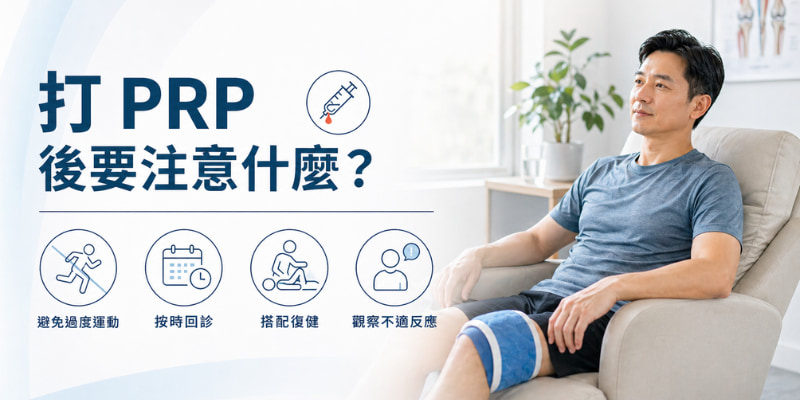
After receiving PRP injections, some people may experience localized soreness, swelling, or discomfort, which is mostly a local reaction to the injection. However, everyone's constitution, injection site, and condition are different, so the actual care should still be followed according to the doctor's instructions. The most important thing to pay attention to after receiving PRP injections is not whether you can immediately resume exercise, but rather to avoid overusing the injured area too early. Many people feel less pain after the injection and rush to run, play ball, climb mountains, or do weight training, which actually re-stimulates the tissue.
After injection, there are a few principles to keep in mind:
- Local soreness after injection : Observe as advised by your doctor and do not take anti-inflammatory and pain-relieving drugs on your own.
- Exercise plan : Do not resume high-intensity exercise too early; proceed gradually.
- Rehabilitation therapy : Physical therapy, muscle strengthening exercises, or motor control may be combined as advised by a doctor.
- Follow-up visits : Follow up according to the treatment schedule to observe the improvement in pain and function.
- Abnormal conditions : If severe pain, significant redness, swelling, heat, or fever occurs, please return to the doctor as soon as possible.
The focus of PRP is not just on the immediate relief after the injection, but also on how to arrange the subsequent recovery period. If your pain is caused by posture, muscle strength, exercise method, or long-term overuse, you still need to adjust your usage habits or cooperate with rehabilitation therapy after PRP, otherwise the pain is likely to recur.
PRP FAQ
Q1: Is PRP a steroid?
No. PRP involves separating a high concentration of platelet-rich plasma from one's own blood and injecting it into the area that needs repair; steroids, on the other hand, are drugs used to suppress inflammatory responses, and the two work on different principles.
Q2: Will PRP be cured after just one injection?
Not necessarily. The effectiveness of PRP can be affected by the severity of the condition, the source of pain, the injection site, the number of treatments, and postoperative care and rehabilitation. Some people may require multiple treatments, while others may not be suitable for PRP and should be evaluated by a physician.
Q3: Is PRP suitable for knee degeneration?
Mild to moderate knee osteoarthritis is a common condition for PRP consultation, but it's not suitable for all knee pain. If the osteoarthritis is severe, the joint is significantly deformed, or there are other structural problems, the treatment may differ, and it's recommended to have an evaluation by an orthopedic or rehabilitation physician first.
Q4: Can PRP treat frozen shoulder, tennis elbow, and golfer's elbow?
These are common musculoskeletal issues that people consult about PRP or overgrowth treatment, but the actual lesion still needs to be examined. Frozen shoulder may involve joint capsule adhesions, while tennis elbow and golfer's elbow may involve tendon degeneration or overuse, and the treatments are not necessarily the same.
Q5: Will it hurt when I get PRP?
The injection itself may be painful, and you may experience soreness or swelling for a few days afterward. Everyone's pain tolerance is different, and the injection site can also affect the sensation. If you are very afraid of pain, you can ask your doctor about the injection method and post-treatment care during your appointment.
Q6: Does PRP have health insurance coverage?
Most PRP treatments are out-of-pocket and are usually not covered by health insurance. The actual cost will vary depending on the clinic, treatment site, preparation method, number of injections, and whether it is combined with other treatments. It is recommended to inquire before making an appointment.
Q7: Do I need to do a check-up before getting PRP?
It is recommended. PRP is not something you can just inject wherever it hurts. Doctors usually determine the source of the pain through consultation, physical examination, and, if necessary, X-ray, ultrasound or other imaging examinations before deciding on the treatment method.
Q8: What are the differences between PRP and hyaluronic acid?
PRP (platelet-rich plasma) tends to promote tissue repair through growth factors in autologous platelets; hyaluronic acid is commonly used for joint lubrication and reducing friction. Their uses, mechanisms of action, and suitable patient groups differ. Patients with knee degeneration often hear about both treatments simultaneously, so it is recommended that a physician assess their condition based on the degree of degeneration and symptoms.
Q9: Can I exercise after getting PRP?
It is not recommended to immediately resume high-intensity exercise. A recovery period is usually needed after PRP treatment. Activities should be gradually resumed according to the doctor's advice, and rehabilitation and strength training may be necessary.
Q10: Are hair regrowth PRP and knee PRP the same?
In principle, both are related to autologous platelet-rich plasma, but their uses, injection sites, evaluation methods, and the departments they are treated for differ. Knees, joints, tendons, and ligaments are usually treated by rehabilitation specialists, orthopedic specialists, or pain management specialists; while hair regrowth PRP is usually treated by dermatologists, hair regrowth clinics, or cosmetic clinics.
In summary, good PRP treatment is not just about getting an injection, but about a complete assessment and follow-up repair plan.
If you're searching for "Recommended PRP Clinics in Taichung," you're probably not just looking for a list; you've likely been experiencing pain for some time. Perhaps your knees hurt when going up and down stairs, making you worry about degeneration; maybe your shoulder is stuck, or you have recurring frozen shoulder that makes even dressing or turning over in bed uncomfortable; or it could be tennis elbow, golfer's elbow, plantar fasciitis, or a sports injury that keeps you from returning to a normal life despite your desire to do so.
PRP (Prophylactic Reproductive Technology) can be a treatment option worth considering, but it's not a panacea, nor is more expensive always better, and it's not suitable for everyone. What you really need to focus on is whether the doctor has first identified the source of your pain, whether there has been sufficient examination and evaluation, whether the injection was performed with precision, whether the costs, risks, and limitations were clearly explained before the treatment, and whether it is followed up with rehabilitation, strength training, and lifestyle adjustments.
This compilation of PRP clinics in Taichung isn't about choosing the "best clinic," but rather about helping you know what to ask and what to compare before making an appointment, avoiding hasty decisions due to pain and anxiety. Physical repair isn't just about a single injection, but about a proper assessment to find the right treatment for you. The pain has been a constant reminder; the next step isn't rushing into PRP, but finding a doctor willing to clearly explain the underlying causes.
<References and Verification Sources>
- Taichung Veterans General Hospital: Precautions for High-Concentration Autologous Platelet-Rich Plasma (PRP) Injection Therapy
- American Academy of Orthopaedic Surgeons OrthoInfo: Platelet-Rich Plasma (PRP)
- Official websites or clinic profile pages of each clinic (same list as above)
(This article is the property of Dauriac and may not be reproduced with images or text.)
You may be interested


Recommended topics
Top Charts
All articles
article keywords
Subscribe to newsletter
article outline